Nebraskans have decided a series of consequential elections in the 2026 midterm elections.
The ruby red, triple landlocked state became an unexpected battleground this year as national pressures trickled into numerous races for statewide and federal office. Nebraska Democrats have not elected a candidate to statewide office since US Sen. Ben Nelson was elected in 2006. State Republicans have controlled the executive and legislative branches for nearly 30 years.
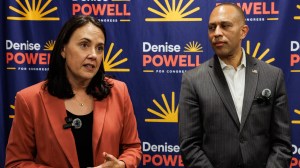
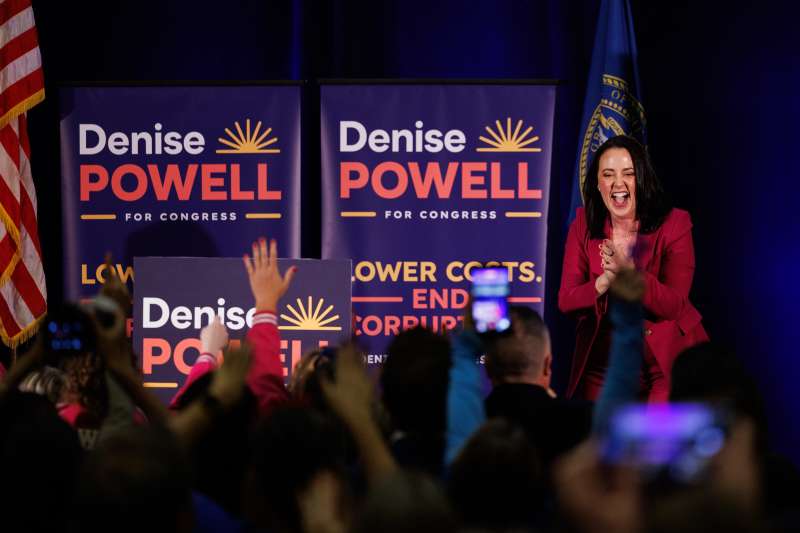
But this year, incumbent Republicans like Gov. Jim Pillen, US Sen. Pete Ricketts, and Rep. Mike Flood (NE-01), faced steeper challenges than expected. Despite that, all three emerged victorious after election night, though Democrats did manage a win in the state’s “Blue Dot” 2nd Congressional District thanks to Denise Powell‘s victory over Republican candidate Brinker Harding.
Read on for the key results by race.
US Senate race: Ricketts v. Osborn
Republican Pete Ricketts has defeated Independent challenger Dan Osborn in the race for Nebraska’s US Senate seat, according to Decision Desk HQ, which called the race for Ricketts at 12:34 a.m. CT. Ricketts currently holds a 50% to 44% lead over Osborn, with 95% of the vote counted.
The race for Nebraska’s US Senate seat had been forecast as a dead heat between Ricketts and Osborn over numerous polls for several weeks.
Ricketts’ bid for his first full term in the US Senate had proven unexpectedly fierce, as he and Osborn, a former union leader and steamfitter from Omaha, struck a sharp contrast along socioeconomic lines—garnering the tag “the millionaire vs. mechanic.” Ricketts, the state’s former Governor and son of billionaire Joe Ricketts, was a key beneficiary of October’s rally stop from President Donald Trump in Grand Island, his first Nebraska visit in four years.
Ricketts’ campaign raised $14 million to Osborn’s roughly $11 million. An additional tens of millions was funneled into the race through PACs and independent expenditures, making it among the most expensive political races in state history.
Ricketts was endorsed by state and national Republicans, while Osborn’s key endorsements included local and national labor organizations, and tacit “support” from the Nebraska Democratic Party, who elected not to run a candidate this year to avoid a split of the “anti-Ricketts” vote. The party described itself as being a part of “a coalition” interested in unseating the former governor.
Osborn described his platform as “paycheck populism,” focused on working class and anti-corruption issues, including campaign finance reform, strengthening antitrust regulations, and ending overseas conflict. He also frequently advocated for the release of the un-redacted Epstein Files and safeguards on AI and data center development—two flashpoints in the race.
Ricketts’ campaign was generally inline with the national Republican platform, often boasting his vote for tax cuts and austerity measures adopted in President Donald Trump’s landmark “One Big Beautiful Bill.”
Nebraska’s 2nd Congressional District race: Harding v. Powell
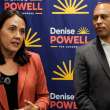
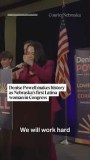
Democrat Denise Powell won the race for Nebraska’s 2nd Congressional District, according to DecisionDeskHQ, which called the race for Powell at 9:51 p.m. local time. Powell currently leads Republican Brinker Harding 59% to 39% with 65% of the vote counted.
The race for Nebraska’s 2nd Congressional District was an open-seat contest following the retirement of Republican Rep. Don Bacon, and was viewed by some as one of the most competitive House races in the country. The seat—which includes all of Douglas and Saunders Counties and portions of Sarpy County—is seen as a key pick up opportunity for national Democrats as the district has voted Democrat for president in three elections since 2008, most recently in 2020 and 2024.
Harding, a commercial realtor and Omaha City Councilman, has walked a tight rope in receiving support from the state’s all Republican delegation and President Donald Trump while simultaneously positioning himself as a pragmatic problem-solver who could work across the aisle. National Republican surrogates like House Speaker Mike Johnson and Majority Whip Steve Scalise made trips to Omaha to stump for Harding.
Powell, a communications and political consultant who co-founded a political action committee focused on electing women into office, centered her campaign on affordability and protecting healthcare, as well as opposing the Trump administration. Her campaign was included in the DCCC’s “Red-to-Blue” program and prompted visits from national Democrats like former Transportation Secretary Pete Buttigieg and former White House Chief of Staff Rahm Emanuel.
Powell has significantly outraised Harding, pulling in over $5 million to her opponent’s $2.8 million. The race was defined by both candidates attempting to pin the other as extreme, prompting sharp exchanges during a series of debates hosted in the span of one week.
Nebraska governor race: Pillen v. Walz
Republican Jim Pillen was reelected to serve another four-year term as governor of Nebraska, according to Decision Desk HQ, which called the race for Pillen shortly after midnight local time. Pillen currently leads Democrat Lynne Walz 49% to 44% with 67% of the vote counted.
The race for Nebraska governor was forecast as tighter than usual for a statewide contest in deep-red Nebraska, with several polls showing a competitive race despite the state’s strong Republican lean.
Pillen, a multimillionaire farmer and former University of Nebraska Regent, was first elected to the governor’s mansion in 2022 after defeating a Trump-backed candidate in the Republican primary. Since, he has aligned himself closely with President Donald Trump and ran for re-election with his endorsement. His first term was largely defined by several failed attempts to change Nebraska’s method dividing Electoral College votes, anti-trans legislative pushes, and a cyclical budget crisis which began as a $1.2 billion surplus. His office also faced criticism over a $2.5 million no-bid economic development contract awarded to someone Pillen knew personally.
Walz, a realtor and former state senator from Fremont, held a moderate track record in the Unicameral and leaned into conservative support in the traditionally conservative state. Her campaign has focused on addressing the state budget, economic development initiatives, and addressing affordability. Walz is a distant relative of Minnesota Gov. Tim Walz, the Democratic party’s 2024 vice-presidential nominee.
Pillen’s campaign raised nearly $13 million to Walz’s roughly $6 million.
Pillen was endorsed by the NRA and a range of state and national Republicans, while Walz garnered support from state Democrats and Republican former elected officials.
Nebraska’s Secretary of State race: Petersen v. Slattery
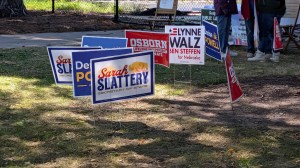
Republican Scott Petersen is projected to be the next secretary of state of Nebraska, according to Decision Desk HQ, which called the race for Petersen at 2:22 a.m. local time. Petersen currently leads Democrat Sarah Slattery 56% to 42% with more than 95% of the vote counted.
The race for Nebraska Secretary of State became an open-seat contest after incumbent Republican Bob Evnen was defeated by Petersen in a spring primary upset that served as a referendum on election security.
The office oversees the state’s election system and handles several state business and international relations functions. Election duties include tracking candidate filings, supervising the state voter registration system, and managing statewide initiative and referendum petitions.
Petersen, an Omaha businessman and former chair of the Douglas County Republican Party, built his campaign on skepticism in the state’s election systems and “restoring public confidence.” He repeatedly raised doubts about the 2020 election and argued that Nebraska should restrict mail-in voting and return to a “one-day election.” He was endorsed by state Republicans like Gov. Jim Pillen and Attorney General Mike Hilgers.
Slattery, a professional chef and small business owner from Plattsmouth, positioned herself as a defender of the state’s existing election infrastructure. She argued that Nebraska’s paper-ballot system and offline counting machines are already secure, and criticized Petersen’s rhetoric as damaging to voter trust.
Petersen’s campaign raised just over $205,000 to Slattery’s $179,000.
Nebraska’s 1st Congressional District race: Flood v. Backemeyer
Republican Mike Flood was reelected to serve another two-year term as representative of Nebraska’s 1st Congressional District, according to Decision Desk HQ, which called the race for Flood at 9:22 a.m. local time. Flood currently leads Democrat Chris Backemeyer 50% to 46% with more than 95% of the vote counted.
The race for Nebraska’s 1st Congressional District was initially rated as “Solidly Republican” by the Cook Political Report, but shifted to “Likely Republican” in the final weeks of the cycle as the national environment worsened for the GOP.
Flood, a former speaker of the Nebraska Legislature from 2007 to 2013, has represented the district since he won the seat in a special election in 2022 and then his past two House elections by 16 and 20 percentage points. His campaign centered around his record of delivering for constituents, including tax cuts and austerity measures in President Donald Trump’s “One Big Beautiful Bill,” while defending his votes on the US-Israel war in Iran.
Backemeyer, a former State Department official for 21 years, launched his bid after asking a question at one of Flood’s town halls. He ran on his work negotiating the 2015 Iran nuclear deal, arguing it would have prevented the current war, and criticized the Trump administration’s landmark spending bill.
The race was defined by sharp exchanges over the Iran war, inflation, and agriculture, many of which were aired during their televised debate.
Fundraising figures showed Flood with a significant advantage, with the incumbent raising roughly $2.7 million to Backemeyer’s $1.1 million.
The district spans 12 counties, including Lancaster County—home to heavily Democratic Lincoln—along with Fremont, Norfolk, Columbus, and suburban Sarpy County.
Nebraska Attorney General race: Hilgers v. Brasher
Republican Mike Hilgers was reelected to serve another four-year term as attorney general of Nebraska, according to Decision Desk HQ, which called the race for Hilgers at 2:22 a.m. local time. Hilgers currently leads Democrat Jocelyn Brasher 56% to 44% with more than 95% of the vote counted.
The race for Nebraska Attorney General pitted a first-term incumbent against a challenger who once worked in the same office.
Hilgers, a former speaker of the Nebraska Legislature from 2021 to 2023, was elected attorney general in 2022 after six years in the Unicameral. He had a litigious first term in office, including lawsuits against Google, Meta, TikTok, the Biden administration, the EPA, California, Colorado, and others. He also involved the office in legal actions against 2024’s medical marijuana ballot initiative and the cities of Lincoln and Omaha over city ordinances aiming to raise the minimum wage. Hilgers was endorsed by the Nebraska Farm Bureau, local police unions, and President Donald Trump. Hilgers appeared with the president at a Grand Island rally in October.
Brasher, an Omaha attorney, previously worked for five years in the Nebraska Attorney General’s Consumer Protection Division—nine months of that under the leadership of Hilgers. She criticized her former boss for taking the office in the “wrong direction” and litigating based on his personal political views. Her campaign prioritized consumer protection, affordability, and fighting corruption. Brasher was endorsed by former Nebraska US Sen. and Gov. Ben Nelson, Omaha Mayor John Ewing, and Lincoln Mayor Leirion Gaylor Baird.
The race was defined by sharply different visions of the office. Hilgers ran largely on his record, airing positive advertisements about his accomplishments in office. Brasher, a first time candidate, traveled to “all four corners of the state” and focused on telling voters what Hilgers had been doing in office.