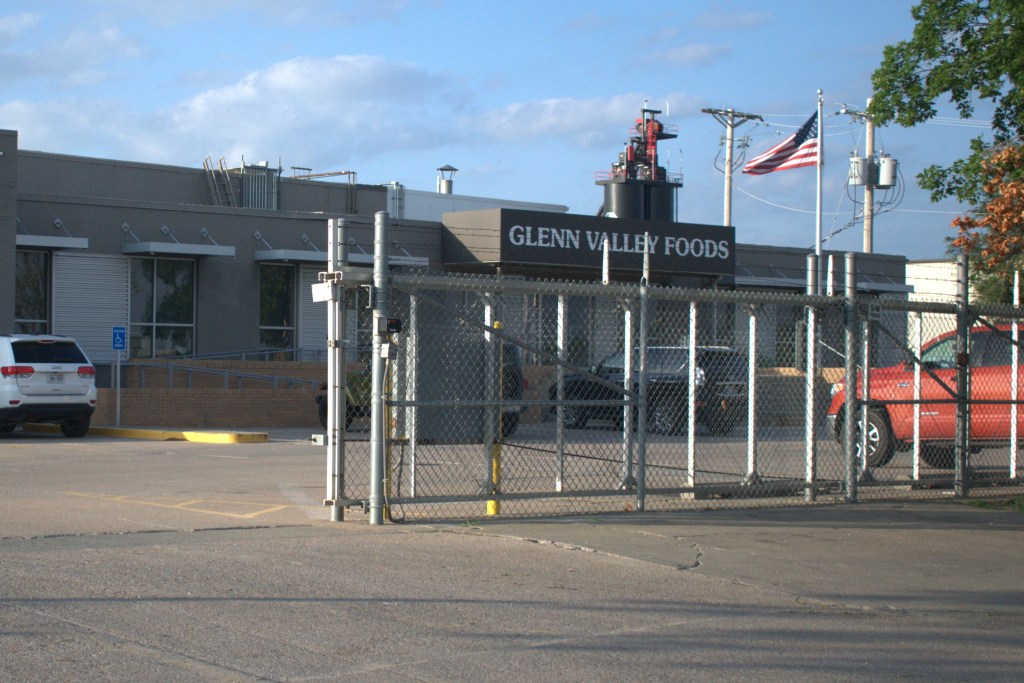
It’s been one year since a food processing plant in the heart of Omaha was the subject of a massive U.S. Immigration and Customs Enforcement (ICE) raid.
While the city’s Latino community has proven resilient, it is still reeling.
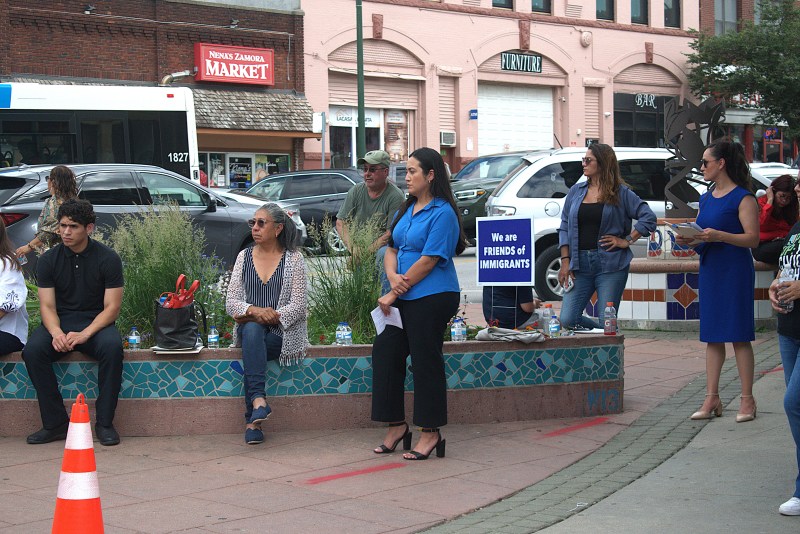
Under a Tuesday afternoon heat advisory, elected officials gathered in south Omaha with community organizations and people affected directly by last year’s raid to illustrate how the community has pushed forward after 80 federal agents executed a high-profile worksite raid at Glenn Valley Foods—a meat producer located in South Omaha, a hub for immigrants from Mexico and Central America.
Seventy-six workers were detained during the raid on June 10, 2025. Following the action, some were released early, others were released on bond, several agreed to voluntarily deport themselves, and dozens were incarcerated in a North Platte jail.
‘We remember the harm’
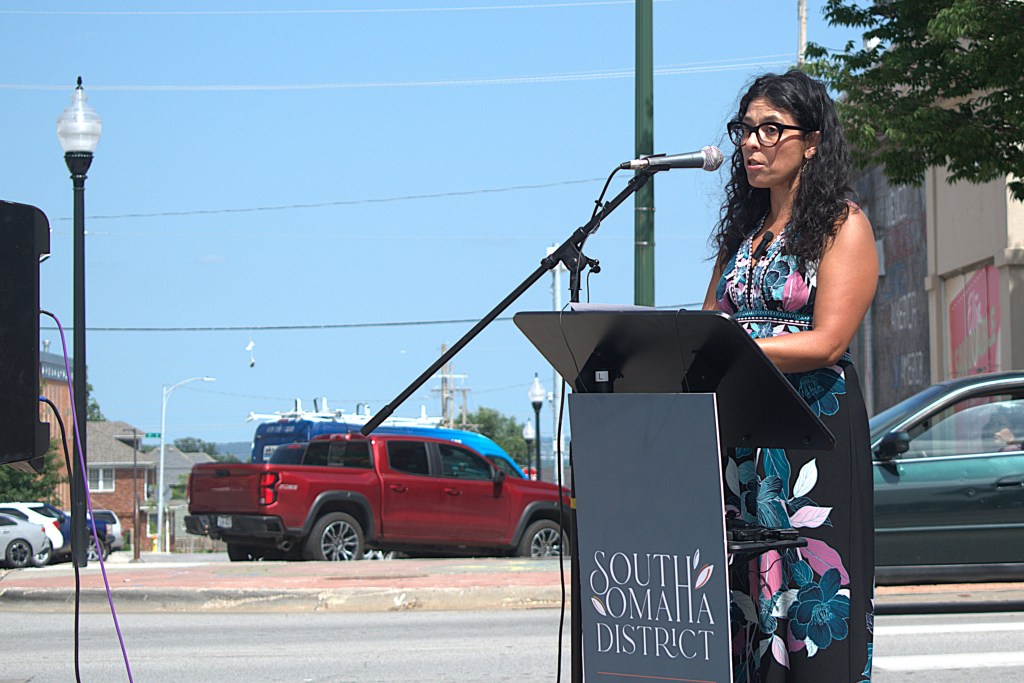
Dr. Lina T. Stover, executive director of the Heartland Workers Center (HWC), an Omaha-based nonprofit focused on immigrant services, said her organization witnessed “the pain” caused by the raid “firsthand.”
“We watched hardworking Nebraskans live with the fear that a simple drive home, a simple drive to school, or a doctor’s appointment could change everything,” Stover said. “Today, we remember the harm. But we also recognize the courage, resilience, and leadership that emerged in response.”
Workers and students displayed bravery in ceaselessly returning to their jobs or school, Stover said, despite the fear of ICE action striking so close to home.
Stover also challenged the “legal” vs. “illegal” binary that is often used to simplify the documentation status of immigrants. She noted that many people live under a “non-permanent status” which includes workers with temporary protected statuses, international students, humanitarian parole recipients, refugees, and other legal visas.
An estimated 223,000 immigrants live in Nebraska, according to Fwd.us, an immigration and criminal justice reform advocacy organization. This would account for 11% of the state’s total population.
Roxana Cortes-Mills, legal director for the Center for Immigrant & Refugee Advancement (CIRA), a nonprofit that provides legal services across Nebraska and southwest Iowa, described the raid as “unlike anything that we had ever seen.”
The raid was the largest immigration action in the state since 2018, when ICE officers raided numerous businesses in O’Neil, Nebraska.
CIRA worked with organizations like HWC, ACLU-Nebraska, and private attorneys to rush legal resources and representation to those affected by the 2025 raid, Cortes-Mills said.
“But the challenges did not end there,” she added. The cohort continues to represent clients in this case, one year later.
Inside the raid
Recounting the day of the raid, Luis Mejia, who worked at Glenn Valley Foods along with his mother who was detained during the raid, said he and his mom went to work “thinking it would be a normal day.”
“However, around 10 a.m., everyone was gathered when immigration officers entered the room. Some people ran while others stayed. My mom hugged me and told me to take care of my younger siblings. Then she ran with the others.”
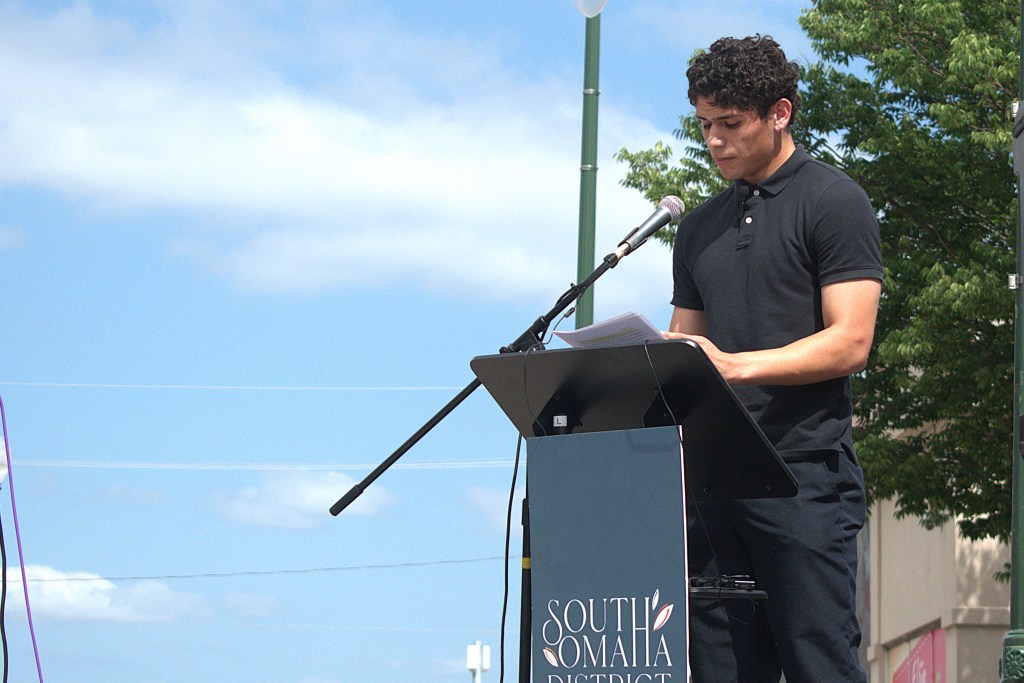
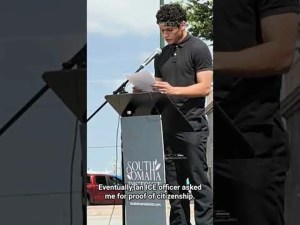
Mejia said while in the room, he witnessed ICE officers harassing detainees. Then one asked him for proof-of-citizenship.
“I had never been asked that before,” he recalled. “I looked at the officer with confusion and told him I was born here.”
Mejia, 20, was eventually let go. He said he left the plant and drove around it looking for his mom. He didn’t hear from her until hours later, when she called him and said she was arrested. It was several days until he heard from her again.
He said his mom had never had any prior contact with law enforcement. She spent an entire month in detention before she was released.
“After this experience… I decided I wanted to do something about it, so I got registered to vote. I’m happy to share that I’ll be voting for the first time this November,” Mejia told Tuesday’s crowd, which erupted with cheers and applause.
‘The fear was real’
Irma Villezcas, owner of several south Omaha businesses, said the raid’s reverberation hit the local economy, too. She cited a 2025 survey conducted by the Nebraska Hispanic Chamber of Commerce Foundation which showed that roughly 80% of businesses saw sales drop between 50% and 100% the week of the raid. To date, Villezcas said six businesses have closed permanently.
“This does not mean that business owners were undocumented. It means that the fear was real,” she said.
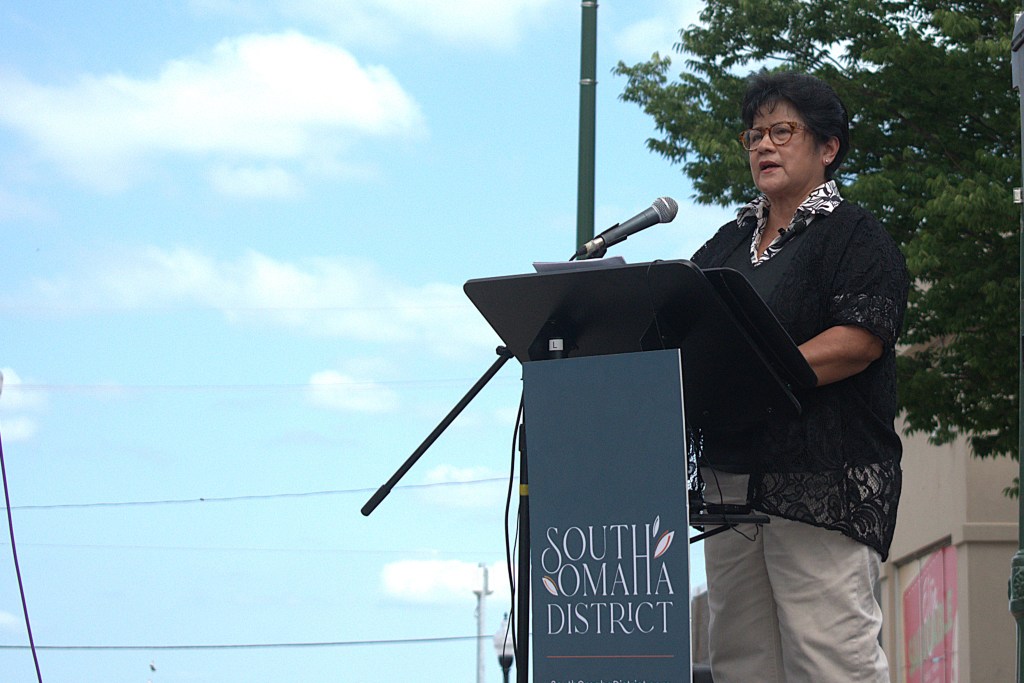
Villezcas added that visiting customer bases from around Omaha and the state have also shrunk due to fear and negative perception.
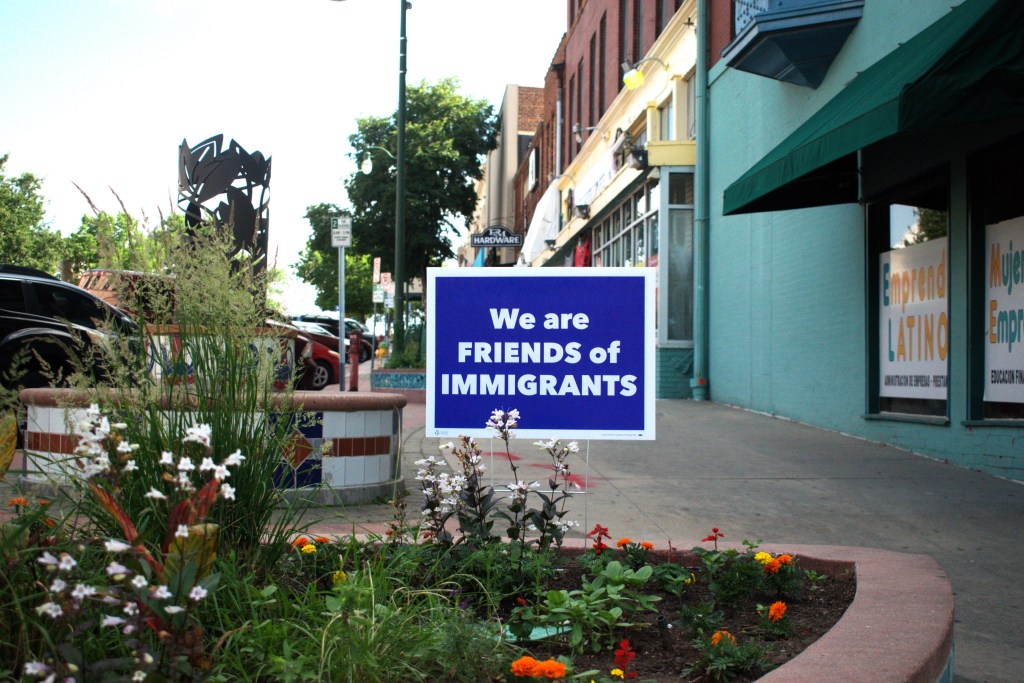
“We cannot allow the negative to define South Omaha. We must promote our diversity, our culture and the tremendous value we bring to the city,” she said. “South Omaha is open to everyone.”
Roger Garcia, Douglas County Commission chair, emceed the event and offered his own remarks. As the raid unfolded last year, the District 1 representative abruptly left the board’s weekly meeting saying: “I have to go try and help.”
Nationally, about 71% of those detained by ICE have no criminal conviction, and many of those convicted committed only minor offenses, including traffic violations.
Garcia said this applied to the “vast majority” of those detained in Omaha. The opposite narrative continues, he added.
While Garcia agrees that those found guilty of committing “grave offenses” ought to face consequences, he said there needs to be a pathway for immigrants to “adjust their status and continue living as our neighbors.”
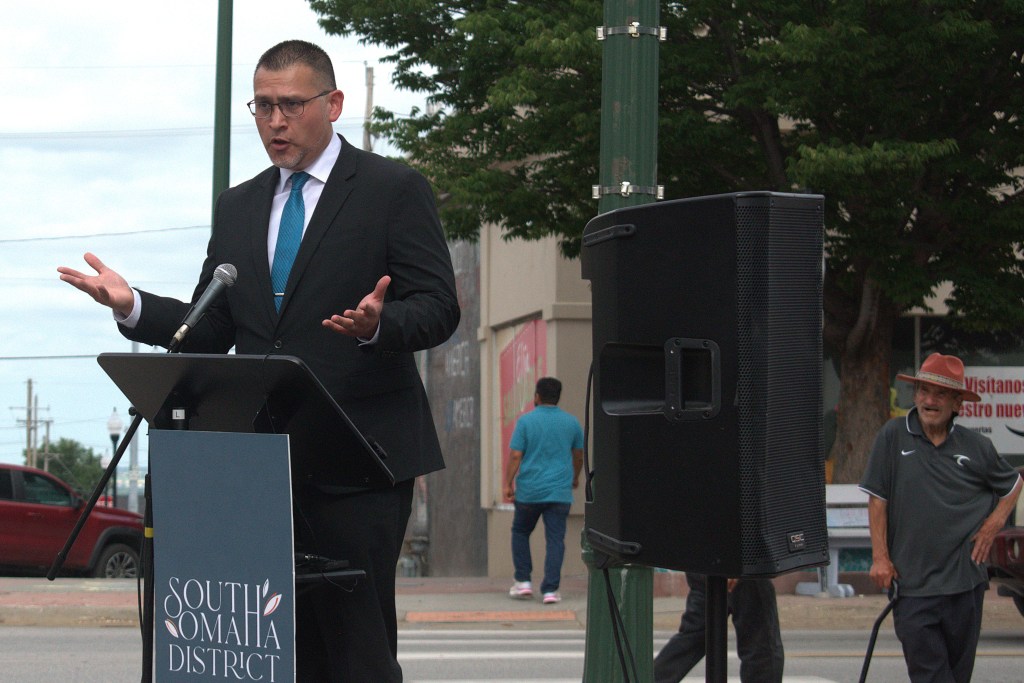
Garcia further criticized the state and local departments who entered into a law enforcement agreement with the Department of Homeland Security, also known as the 287(G) program. Nebraska agencies that participate in the program include:
- Banner County Sheriff’s Office
- Beatrice Police Department
- Dakota County Sheriff’s Office
- Nebraska Department of Correctional Services
- Nebraska State Patrol
- Red Willow County Sheriff’s Office
- Sioux County Sheriff’s Office
- Wheeler County Sheriff’s Office
“Instead of our community seeing law enforcement as those who protect and serve, many will see them as an extension of federal immigration enforcement,” Garcia said. “Luckily, we have a supportive mayor and local police department.”
Standing together
Omaha Mayor John Ewing (D), the city’s first African American elected mayor, called this a “very difficult chapter in our community’s recent history.” The 2025 raid occurred the day after he was sworn in.
“While immigration enforcement is not within the authority of the local government, what was within our control was how we responded as a community,” Ewing said. “We chose compassion, we chose partnership, and we chose to stand together.”
Ewing said, in the immediate aftermath, his office worked closely with HWC, CIRA, and the Consulates of Mexico, Guatemala, and El Salvador to connect families to resources and information.
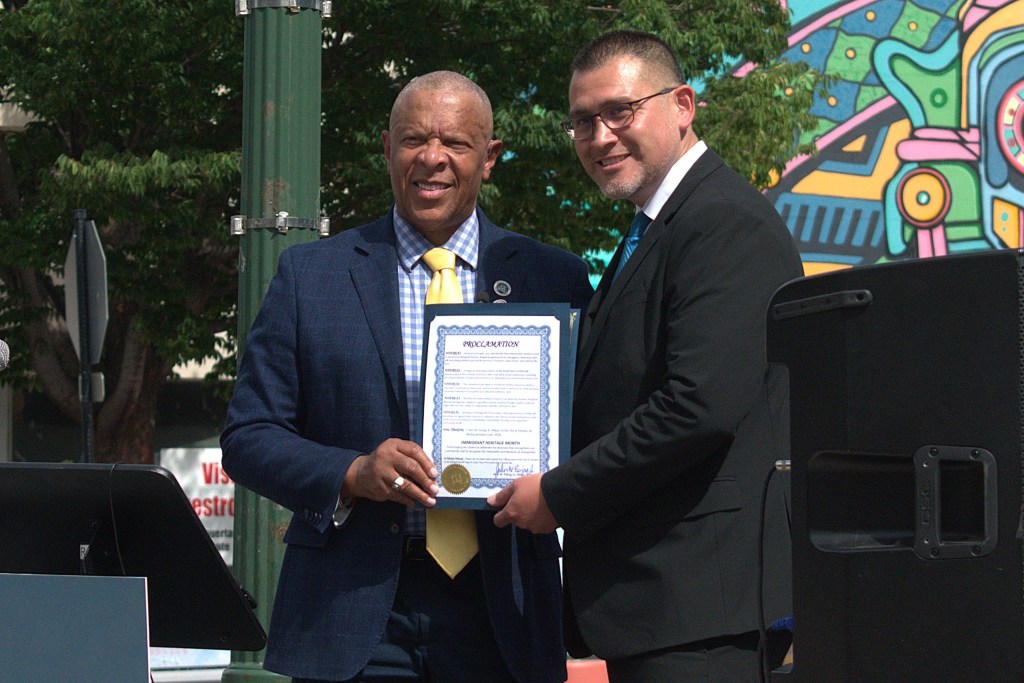
“The story of America, in many ways, is the story of immigrants,” the mayor said, before signing a proclamation recognizing June as Immigrant Heritage Month in the city of Omaha.
“In witness whereof, I have set my hand and caused the official seal of the City of Omaha to be affixed, encouraging all citizens to celebrate the diversity that strengthens our community and to recognize the invaluable contributions of immigrants,” the proclamation read.
On Wednesday, June 10, south Omaha will host Día de Alegría, or Day of Joy, to celebrate immigrant contributions to the city. The event will take place on Omaha’s 24th Street corridor, and feature live music, family activities, and cultural exhibits.
The full itinerary is as follows:
Live music in La Plaza
- 12 p.m. – Mariachi Los Caballeros
- 6 p.m. – Los Nobles
Kid Activities – 5 p.m. to 8 p.m.
- Free face paintings and balloon sculpting
- Free paletas (lollypops) and bracelet making activity
Free South Omaha History Tours – 10 a.m. and 4 p.m.
- Hosted by Anna Hernandez, at La Michoacana (4924 S. 24th St.)
Gardening Tips – 2 p.m.
- Tutorial on how to make seedballs and how to water your plants by the Master Gardeners of UNL Extension
El Museo Latino Open Exhibit – 11 a.m. to 5 p.m.
- Presencia y Memoria / Presence and Memory Oral Histories
- Americano: Latino Life in the United States Smithsonian