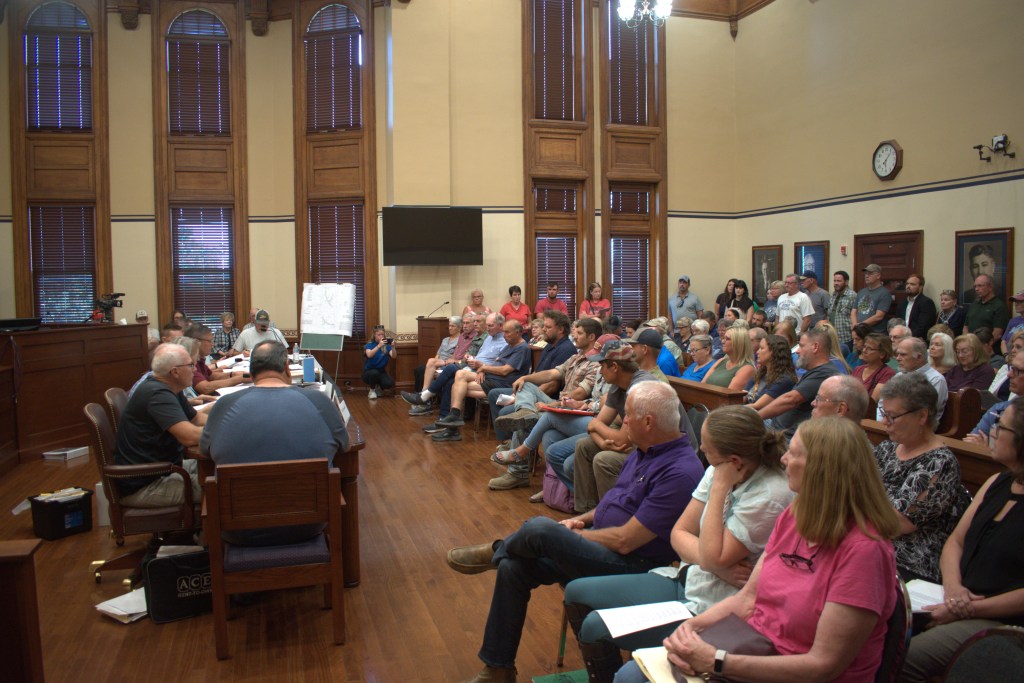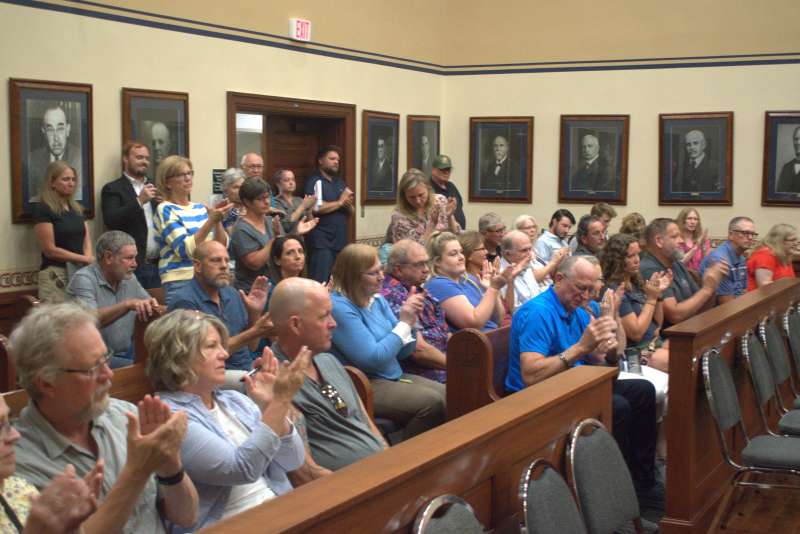
The Gage County Planning and Zoning Commission advanced an 18-month data center moratorium Tuesday evening, drawing thunderous applause following an hours-long public hearing.
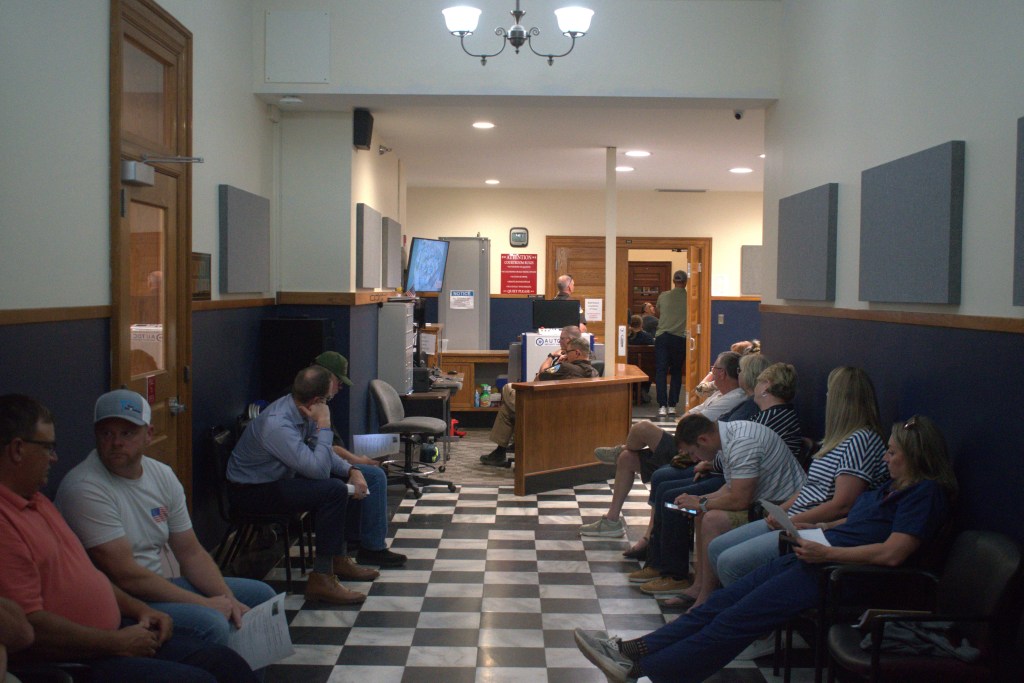
Local residents wishing to speak spilled out of the hearing room, which was moved to the district courtroom in Beatrice to accommodate capacity. Roughly 200 people packed the room for the 6 p.m. meeting, coming from all over the county’s cities and towns, from Beatrice to Wymore to Cortland, some even traveling an hour south from Lincoln.
Commission members, who are appointed as volunteers for the unpaid seat, listened to public comments until no one else wished to speak. The meeting stretched four hours, concluding just before 10 p.m. Of those who attended, 29 took to the microphone and voiced support for the moratorium, expressing various concerns about a proposed project looking to consume over 1,000 acres in the northern region of Gage County.
The proposal comes from Tenaska—an Omaha-based private energy company founded in 1987. In 2025, Forbes ranked Tenaska as the 50th largest private US company, above the likes of Discount Tire, Chick-fil-A, and Perdue Farms. To qualify for the list, companies must have estimated revenue of $3 billion or more from the most recent fiscal year.
Community opposition
Residents articulated a diversity of concerns, ranging from environmental stress, to public health detriments, to economic fallout.
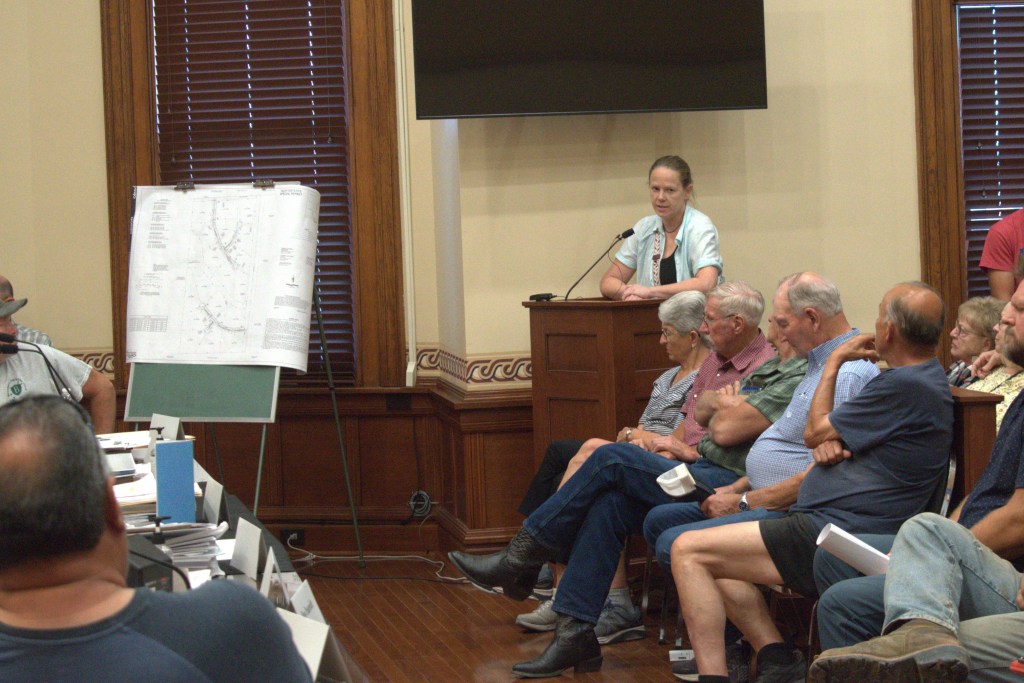
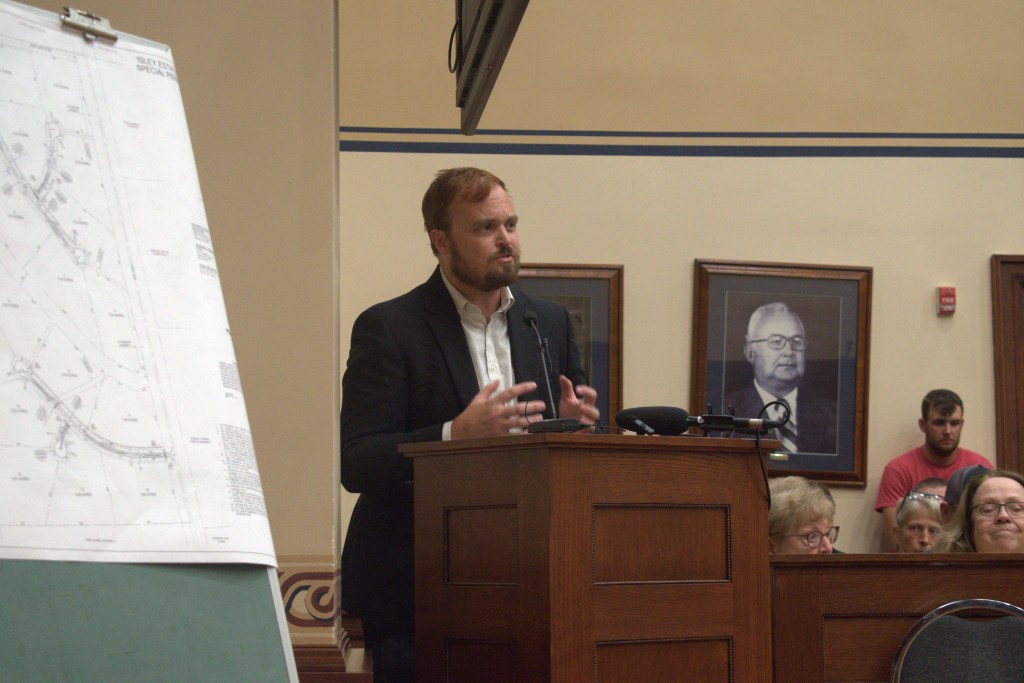
Sean Fintel, a farmer from Firth, said he lives about two miles west of the proposed site. He was first to offer testimony and responded to the notion that opposing data center construction would signal that Gage County is “closed for business.”
“ Respectfully, I believe that misses the real question,” he said. “No successful farmer, business owner, or family makes decisions simply because an opportunity appears. They evaluate the risks, weigh the consequences, and ask whether the decision will leave them better off in the long run. ‘Being open for business’ should not never mean ‘being open to every business,’ especially this one.”

He asked commission members to consider the project’s long term impacts to water quality and the wider environment, saying the impacts would reverberate for generations.
“Years from now, people will not ask whether we were open for business. They will ask whether we were wise… whether we chose immediate gain or a lasting legacy. That is the legacy being decided here tonight,” he concluded, to applause.
Briana Bartlett, a farmer from Cortland, called the data center proposal a “ huge gamble where trillion-dollar tech companies get a pile of gold and Gage County foots the bill.” She voiced skepticism about the center’s supposed closed-loop cooling system, which hypothetically recirculates a fixed amount of water to absorb heat emitted by the machines.
“We’re told that if we don’t say yes to these centers, that we’re driving away the future. But that’s a false choice,” she said. “We are being asked to drain our aquifer so that a chatbot can write a poem or so that a president can make an AI image of himself as Jesus.”
Up against a ‘shot-clock’
After roughly 45 minutes of testimony, the commission tabled the moratorium consideration to work through the rest of Tuesday’s agenda. They returned to the subject around 8:30 p.m., the courtroom pews still packed with attendees waiting to speak.
Edison McDonald of Hickman, representing Nebraska Communities United, a nonprofit focused on protecting water, land and air resources, spoke in support of the moratorium to allow time to establish proper guidelines for projects of this kind.
He pointed toward recent legislation that he said “put a shot-clock” on local municipalities. Namely Legislative Bills 663 and 1261.
LB 663, signed into law by Gov. Jim Pillen in February, established an expedited timeline for county commissions to act on permit applications. LB 1261, also approved by Pillen this year, makes it easier for large industrial customers, such as data centers, to use privately owned power facilities. If the facility meets certain location, grid connection and approval requirements, public utilities cannot condemn or take over the facility.
This stipulation is notable for Nebraska—the only state in the nation where 100% of electric utilities are publicly owned and operated.
“[These bills represent] a significant shift, and I think it shows how much this industry is rapidly growing, and we’re not prepared to deal with it,” said McDonald. “ We don’t have regs to address it, and that requires time to dig into that and really understand what are those issues.”
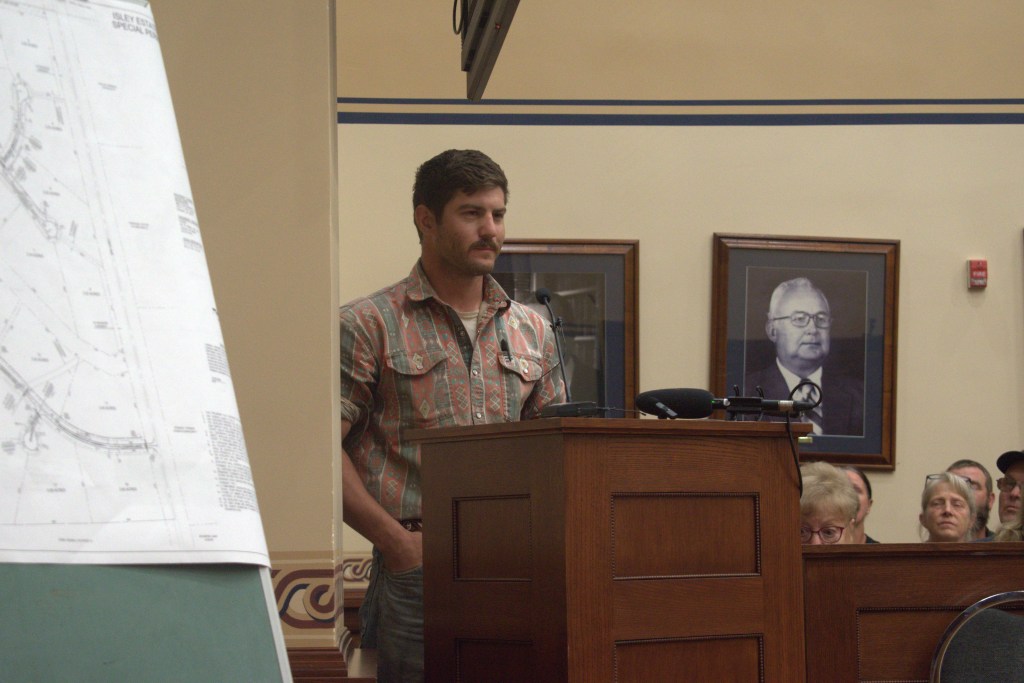
“ I think you guys can read the room,” said Thor Farabee of Pickrell, gesturing to the packed courtroom. “ I build power plants for a living. I will never build one for a data center… We can’t put Pandora’s box shut again. AI is out. The data centers are out. But we can make a difference in Gage County.”
Pleading their case
After hours of supportive testimony for the moratorium, each speaker followed by applause, the list ran dry, and the commission offered the floor to those opposing the motion.
The room fell silent as attendees looked around the room. One person stood up and approached the mic: Eli Waring, an associate developer for Tenaska.
He first clarified, Tenaska is not a data center developer nor a tech firm, but an energy company.
“Our role is to look for opportunities to develop power generation to serve a variety of users… as part of a feasibility assessment in Gage County, one of the key parts is working to identify potential customers that need reliable large-scale power,” he said. “Those could be data centers or other large users.”
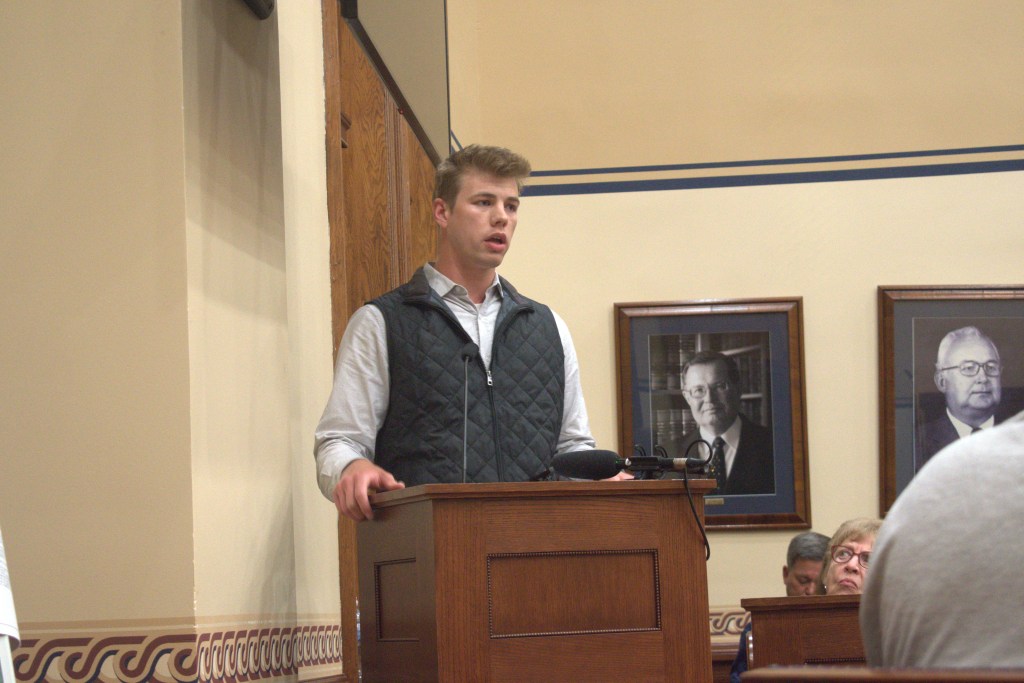
Waring urged the county to continue developing clear regulations but questioned whether a moratorium was necessary, arguing the county’s existing special use permit process already provides opportunities for public hearings, multiple layers of approval and conditions on potential projects. He also warned that even short-term moratoriums can send a negative signal to the business community.
He was the first speaker not to receive applause from the crowd.
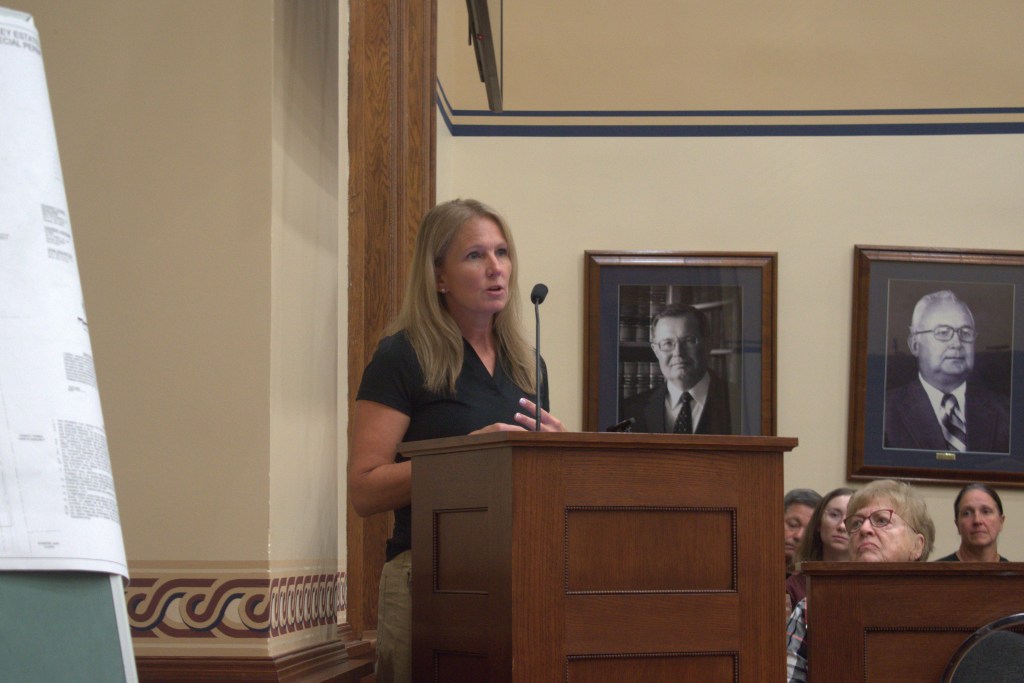
One speaker, Cally Ideus of Filley, a Republican candidate for the Nebraska legislature in District 30, testified in the neutral.
Ideus urged commissioners to listen to residents’ concerns and move quickly to update county regulations. She said constituents in Lancaster and Gage counties have raised serious concerns about unregulated development, unknown risks, and the need for transparency.
”I would highly encourage you to listen to the community,” she said. “Other counties have not, and they’ve paid serious consequences, both in economic fallout and legal battles. It’s also destroyed communities.”
What comes next
Following Ideus testimony, the board moved to vote on the moratorium. The crowd, which only dwindled slightly by 10 p.m., cheered in anticipation.
There was some deliberation between an 18-month versus a two-year moratorium, ultimately landing on the former.
The commission voted unanimously to advance the moratorium, which bars the consideration of conditional and special use building permits for data centers. Commissioners said this will allow time for officials in Gage County to establish relevant regulations.
Immediately after the vote, in a statement to Courier Nebraska, Waring said, “we’re probably a little early… We appreciate the time from the commissioners. We’re looking forward to working on regulations together.”
The recommendation will now go before the Gage County Board of Supervisors for consideration. The seven-member board has the authority to overrule the Planning and Zoning Commission.