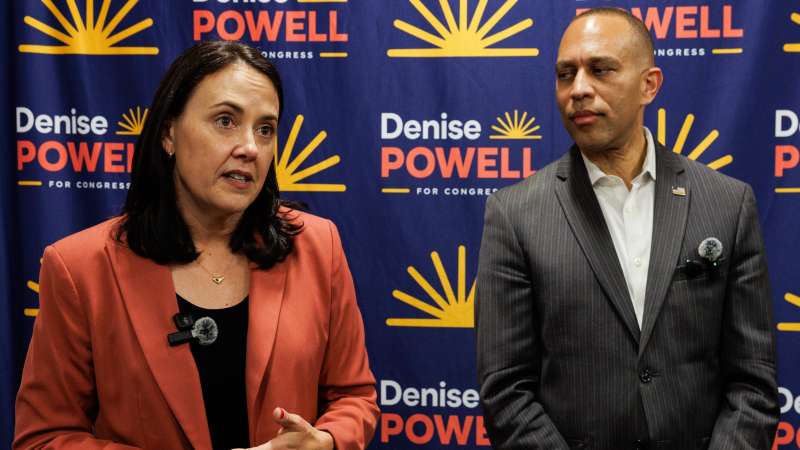
Representative-elect Denise Powell (D-Neb.) says she’ll be “proud” to vote for Rep. Hakeem Jeffries to be the next speaker of the House, further securing the New York Democrat’s bid for the leadership role as other incoming House members voice skepticism.
Powell, set to be the lone Democrat in Nebraska’s federal delegation when she takes office on Jan. 3, 2027, confirmed to States Newsroom this week that she’d back Jeffries for the position.
“I’m the first Latina to ever be in Congress for my state,” Powell said. “So I’m proud to vote for the first Black speaker of the House.”
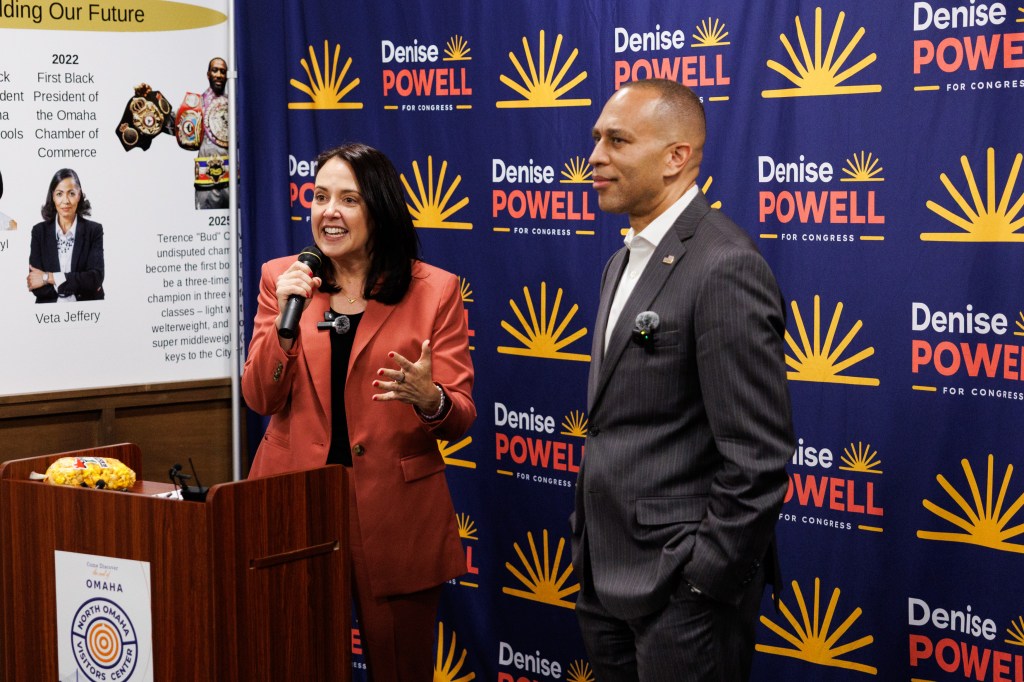
Her commitment to Jeffries was foretold on the campaign trail, where she told CBS in October that she “understands the importance of firsts.” Jeffries also flew to Omaha to campaign for Powell just days before the election.
Powell is, indeed, the first person of color elected to federal office in Nebraska—and only the second woman elected to the US House in the state’s history, following Republican Virginia Dodd Smith, who represented Nebraska’s 3rd Congressional District from 1975 to 1991.
Jeffries, if elected speaker when the new Congress convenes Jan. 3, would be the first Black American named speaker of the House—a position second in line to the presidency, just after vice president.
Jeffries’ odds
As the potential successor to powerful Rep. Nancy Pelosi, Jeffries is confident in his bid for speaker, which requires him to secure 218 votes from his colleagues. While some midterm races are still being counted, House Democrats have won at least 254 seats, with some estimates that they’ll end up with nearly 260.
Some of the incoming Democrats, however, unlike Powell, have not committed to backing Jeffries for the role, pushing instead for new leadership in Washington and a bold agenda after a blue-wave year. Many of these representatives-elect are to the left of Jeffries on many issues, representing a deeper and long-standing ideological divide between centrist and progressive forces in the national Democratic Party.
“I’m going to work hard to talk to every single member about what we’ve been able to do together over the last two years, and what the opportunities are for us to do together in the next two years to deliver upon the dramatic change that the American people so decisively voted for,” Jeffries told reporters on Monday when asked about the schism.
“You think I don’t have the vote nailed down?” he added, upon the suggestion that his bid for speaker wasn’t certain.
‘A good team player’
In a social media post this week, Rep.-elect Don Leonard (D-Ohio) said senior members told him to vote for Jeffries regardless of whether the Democratic leader commits to addressing issues he says are “key,” like overturning the Citizens United decision and ending US support for Israel amid the genocide in Gaza and the war in Iran.
Leonard said those officials vowed to make his life “a living hell” and oust him in 2028 if he does not support Jeffries’ speaker bid.
“It’s part of the stuff you see in the movies,” Leonard said in the video. “It’s a whole other thing when it’s in person, by people who actually care about you and are cheering for you but expect you to wear the team jersey and be a good team player.”
Other progressive Reps.-elect uncommitted to Jeffries include Melat Kiros (D-Colo.), Claire Valdez (D-N.Y.), Darializa Avila Chevalier (D-N.Y.), and Adam Hamawy (D-N.J.).

Powell’s priorities
The House is preparing for a speaker nomination vote next week. In early October, Jeffries pledged a full 100-day agenda focused on lowering the cost of living and launching corruption investigations into the Trump administration.
In a post-Election Day press conference, Powell said her first priorities in Washington would include reversing federal cuts to healthcare programs like Medicaid and the Affordable Care Act, as well as reining in Trump’s sweeping tariff regime—all planks within Jeffries’ 100-day agenda.
Powell also indicated that she would be interested in serving on the House Agriculture Committee and the Energy and Commerce Committee.
A vote for or against Jeffries will be among incoming House members’ first pivotal decisions in the next Congress—one that will influence both their 2028 reelection bids and the support (or lack thereof) they receive from national Democratic leaders.