On the heels of newly announced cuts to Medicaid and disability care, a group of Nebraska lawmakers are pushing to force a special legislative session to address the issue.
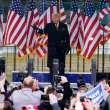
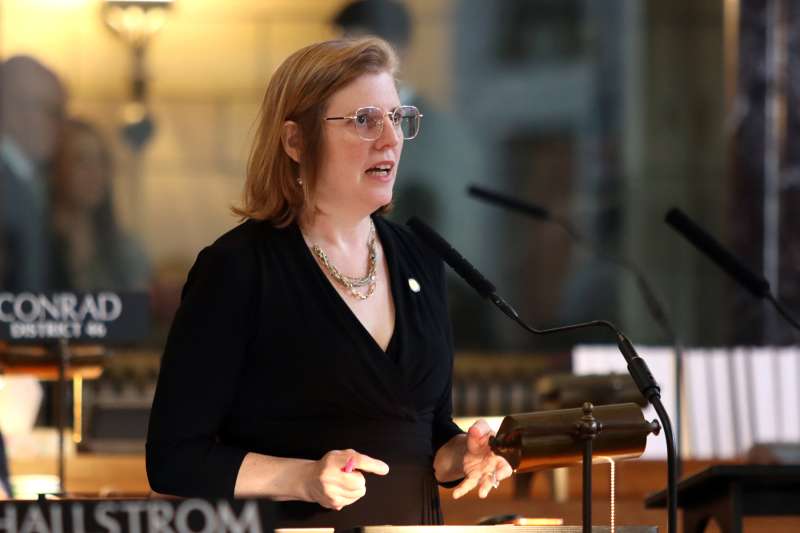
During a press conference at the State Capitol on Tuesday, Sen. Machaela Cavanaugh of Omaha said her petition to call the session has 19 signatures (including her own) and needs a total of at least 33 within 10 days to send the letter to Gov. Jim Pillen—at which time he would have five days to call the Legislature back into session.
On Friday, Nov. 20, the Nebraska Department of Health and Human Services (DHHS) announced it would enact a 3% cut to Medicaid reimbursement rates for providers in 2027. Additionally, on the same day, a 4% provider rate cut was announced for Developmental Disabilities Waiver services, also starting in 2027.
Further, it was announced that Medicaid reimbursement rates would see another 3% in 2029, and another 4% cut to disability provider rates in 2028.
Reimbursement rates are set payments received by healthcare providers for treating beneficiaries of these programs. When reimbursements are cut, providers generally absorb the loss, which can lead to higher costs for those on private insurance or providers opting not to treat patients who use these assistance programs.
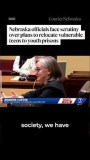
Lawmakers at Tuesday’s press event were surrounded by supporters and patients who would be impacted.
The latest cuts compound with those outlined in H.R. 1—President Trump’s “One Big Beautiful Bill” Act—which is slated to axe $1 trillion in Medicaid funding over the next 10 years, representing about 11% of the program’s total budget.
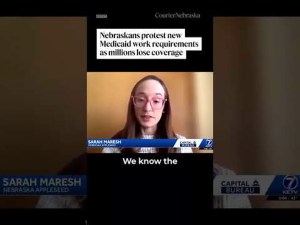
Nebraska is also the first state in the nation to enact new federal work requirements within H.R. 1. At the governor’s directive, the state ushered in these new requirements on May 1, 2026, months ahead of the federal deadline of Jan. 1, 2027.
On Nov. 20, coincidentally, the Centers for Medicare & Medicaid Services announced a six-month deadline extension for rolling out work requirement changes. Nebraska opted out of the extension.
The reason for the cuts, according to the state, is to help close a current $175 million state budget deficit, which is projected to balloon to over $1.1 billion in the next biennium.
“The rising costs of healthcare are driving increased Medicaid expenditures,” Jeremy Brunssen, DHHS interim director of Medicaid and long-term care, told the Lincoln Journal Star. “Continuing on the current trajectory is not financially sustainable and threatens the state’s ability to maintain services.”
The push from lawmakers to address these cuts outside the regular annual session—which begins on Jan. 6, 2027—is bipartisan.
So far, all registered Democrats in the officially nonpartisan Unicameral have signed on, plus the body’s lone progressive-independent and three Republicans: Sens. Merv Riepe, Myron Dorn, and Tom Brandt.
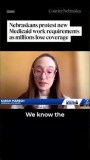
“Waiting till January would be too late,” Cavanaugh said Tuesday. “We recognize the seriousness of Nebraska’s budget deficit. However, fiscal responsibility requires understanding both the immediate savings and the long-term consequences of these cuts. When services disappear, the need for those services does not.”
A new class of Nebraska lawmakers will take office on Jan. 6, breaking the 33-vote veto-proof supermajority held by state Republicans since 2024.