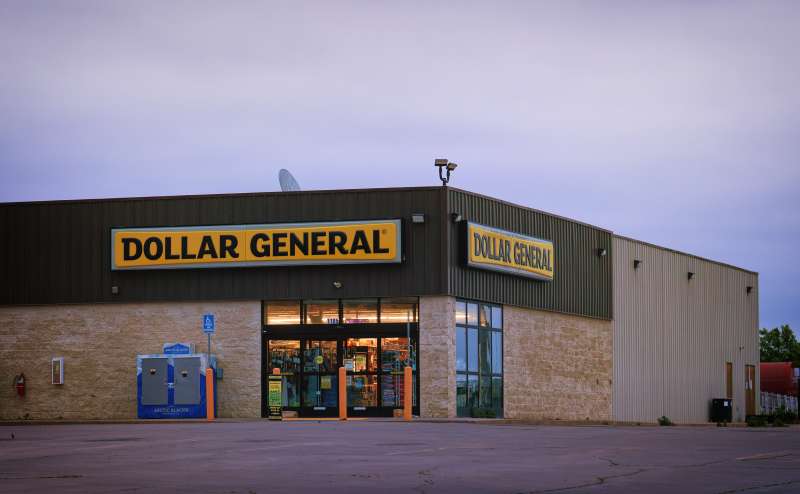
On Oct. 26, the Nebraska Attorney General’s Office joined the Federal Trade Commission (FTC) and 19 other states in filing suit against the Dollar General Corporation, alleging that the company engages in “long-running deceptive pricing practices” that have cost customers millions of dollars.
The lawsuit claims Dollar General locations routinely charge customers more at the register than the prices displayed on shelves or on price tags and advertisements.
The complaint states that thousands of stores have used these practices, garnering tens of thousands of customer complaints. Despite being made aware of the problem, the suit alleges that Dollar General has failed to implement policies or practices to adequately address the problem.
“Nebraskans expect that they are charged at the register the prices that are advertised,” said Nebraska Attorney General Mike Hilgers in a release. “Dollar General betrayed that trust at the expense of hard-working Nebraska families. Our office is committed to holding Dollar General accountable for these practices and ensuring that consumers are protected from deceptive pricing and unfair overcharges.”
The complaint, filed in the US District Court for the Middle District of Tennessee, alleges that Dollar General’s practices violate the FTC Act, the Gramm-Leach-Bliley Act, and state laws.
“Dollar General has betrayed the trust of millions of American consumers and imposed significant financial harm on communities and consumers who are already struggling to make their paychecks last,” stated Christopher Mufarrige, director of the FTC’s Bureau of Consumer Protection. “The FTC’s action underscores the agency’s commitment to lowering costs for consumers by stopping deceptive pricing practices that harm Americans.”
Dollar General operates more than 21,000 stores across the country. A statement on the company’s website refutes the claims made in the suit.
“The lawsuit filed today by the Federal Trade Commission and several States suggests that we have abandoned our mission and willfully disregarded the affordability needs of our customers,” the statement reads. “Nothing could be further from the truth.”
The statement admits that “occasional price discrepancies can occur” but insists that store management and staff are encouraged to correct the issue for the customer whenever it’s raised.
“In recent years, we have enhanced our price-accuracy processes and remain committed to continuous improvement,” the statement continues.
Other states involved in the lawsuit include Alabama, Arizona, Arkansas, California, Connecticut, Florida, Illinois, Iowa, Kansas, Louisiana, Michigan, Mississippi, New Jersey, North Carolina, Ohio, Oklahoma, Tennessee, Utah, and Wisconsin.
READ MORE: Thinking about a tiny house in Nebraska? Here’s what to know about zoning, costs, and climate