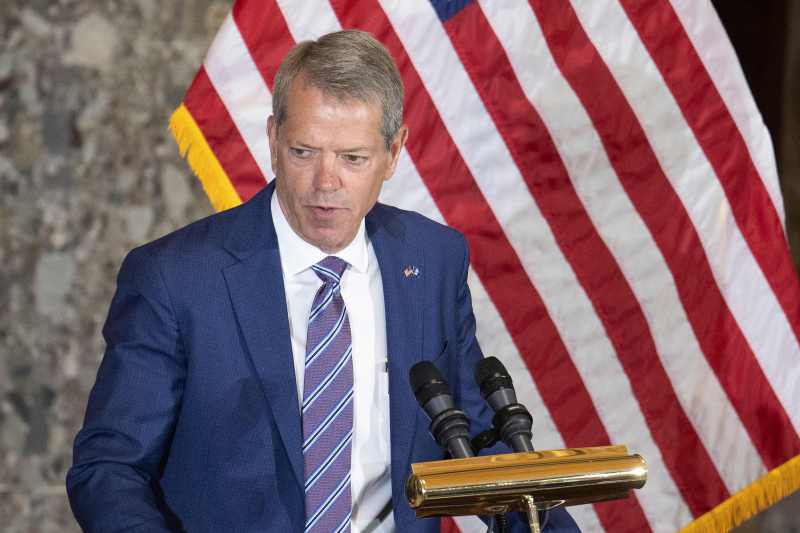
Nebraska Governor Jim Pillen is facing criticism over “dehumanizing” comments he made last week while signing a directive meant to combat bigotry.
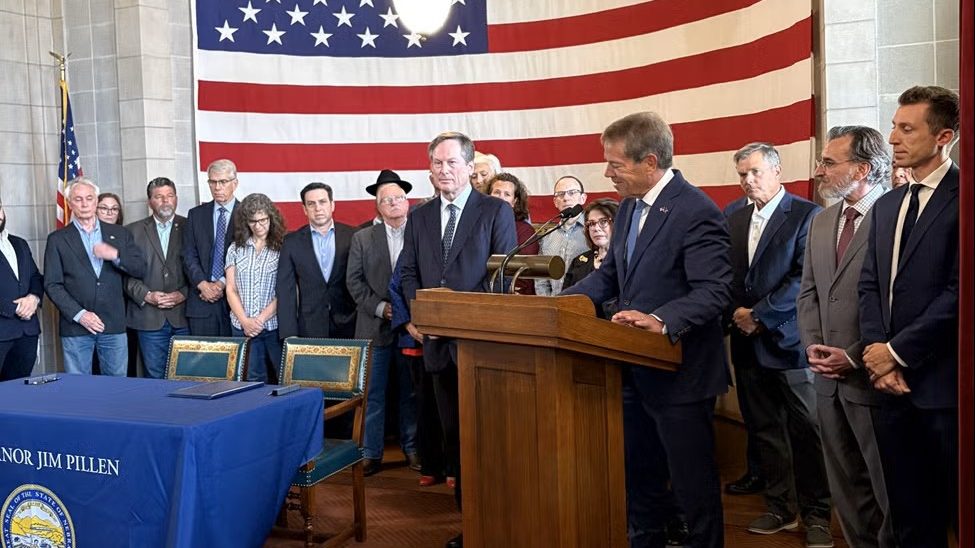
The Republican office holder gathered with state officials, lawmakers, and faith leaders Friday to sign an executive order (EO) to establish statewide reporting and educational standards regarding antisemitism in Nebraska’s public schools.
While taking questions from reporters after the signing, Pillen said Palestinian people are “born to kill” Jews and Christians.
What the order says
The order, EO 26-14, would require all public K-12 school districts and institutions of higher education in Nebraska to file an annual report that documents all incidents of harassment or discrimination with antisemitic intent. Further, the order tasks the state Department of Education with providing curriculum about “Jewish American history, the Holocaust, and the State of Israel” to all public and nonpublic schools statewide.
Legally, a governor’s executive order acts as an official directive for the state government and state agencies. While not a statutory law passed by the legislature, an EO carries the force of law when directing how executive branch agencies (e.g. the Department of Education) conduct operations.
The first annual report to the Governor’s Policy Research Office is due September 1, 2026.
While Pillen’s order might seem innocuous on its face, its definition of “antisemitism” is controversial.
The order incorporates the working definition established by the International Holocaust Remembrance Alliance (IHRA):
“Antisemitism is a certain perception of Jews, which may be expressed as hatred toward Jews. Rhetorical and physical manifestations of antisemitism are directed toward Jewish or non-Jewish individuals and/or their property, toward Jewish community institutions and religious facilities.”
The definition offers 11 “illustrative” examples of antisemitism, seven of which mention the state of Israel, while also specifying: “Manifestations might include the targeting of the state of Israel, conceived as a Jewish collectivity. However, criticism of Israel similar to that leveled against any other country cannot be regarded as anti-Semitic.”
Critics argue the redefinition does, in fact, blur the line between criticism of Israel as a nation-state and traditional understandings of antisemitism, resulting in possible censorship of constitutionally protected political speech.
The remark, in context
When asked how the order might affect Nebraskans who critique the government of Israel, and whether the order might violate the First Amendment, Pillen reportedly recalled his trade mission to Israel last year.
The four-day trip in October 2025 was used to promote Nebraska-made kosher beef, agricultural technology, and manufacturing partnerships.
While there, Pillen met with Prime Minister Benjamin Netanyahu and President Isaac Herzog, and visited a village three miles east of Gaza, Palestine, and other sites attacked on October 7, 2023—when Hamas militants breached the Israel-Gaza barrier, killing approximately 1,200 people (828 civilians and 369 security force members among them).


The subsequent Israeli counteroffensive has killed at least 72,063 people, according to Feb. 2026 estimates from the Gaza Health Ministry. This figure has been independently verified as a significant underestimate, with thousands of bodies believed buried under rubble or mutilated beyond recognition.
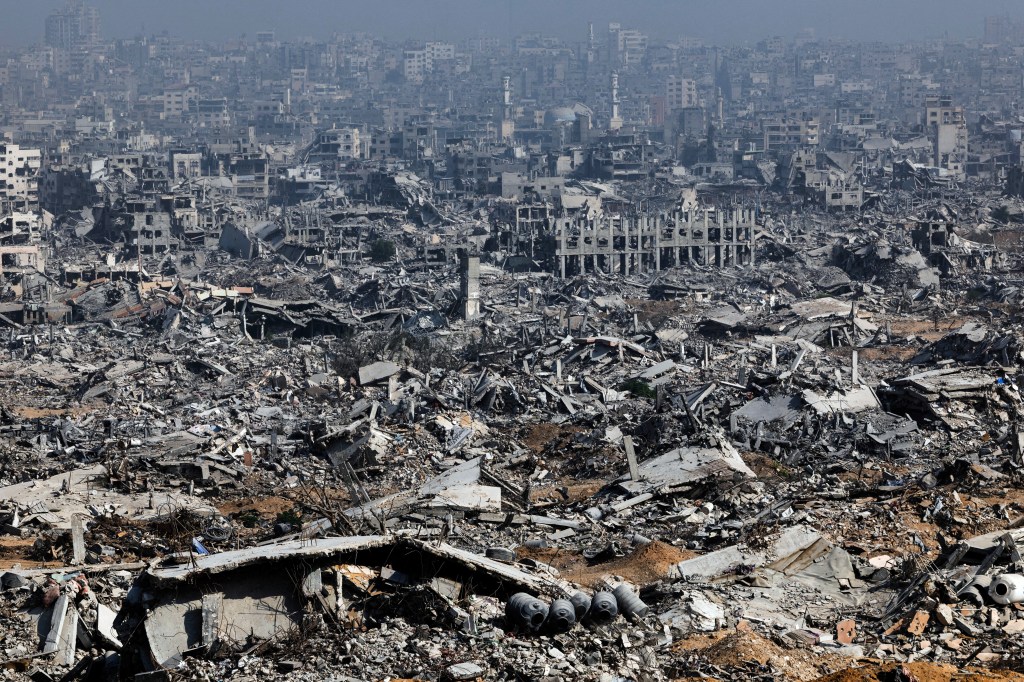
The scale of damage to infrastructure in the region has also been massive. Just 26 days into the conflict, Israel dropped more than 25,000 tons of explosives—equivalent to two nuclear bombs—in the Gaza Strip, according to the Euro-Med Human Rights Monitor. Eight out of every 10 buildings that once stood in Gaza have reportedly been damaged or flattened.
A 2025 report by an independent United Nations commission found that Israel has committed genocide against Palestinians in Gaza. The International Criminal Court (ICC) issued arrest warrants in 2024 for Netanyahu and former Defense Minister Yoav Gallant, accusing them of committing war crimes and crimes against humanity.
Pillen said that during his trip Netanyahu compared American universities now to those in 1930s Europe during the rise of Nazi Germany.
“We have to stand up, so history is not repeated,” said the governor, a former University of Nebraska regent.
“Everybody, whether it’s in the Gaza Strip or elsewhere, they want to kill every Jewish person on the planet,” Pillen continued. “Anybody that wants to stand up and talk about Palestinians, they’ve got to understand that those people are born to kill Jews and Christians. We have to stand up and deal with reality. It’s as simple as that.”
When another reporter asked Pillen if that was an overgeneralization, he said it was not.

The reaction
Pillen’s remarks were swiftly condemned by local advocacy groups and state Sen. Megan Hunt of Omaha, the legislature’s lone progressive registered nonpartisan.
“No child is born hating Jews. No child is born hating Christians. No child is born hating anyone,” Hunt responded on social media. “When Gov. Pillen claims that an entire people are born to kill, he is denying the humanity of millions of people. History is full of atrocities justified by claims like this.”
Hunt has been outspoken about Palestine during her tenure in the legislature. Due to term limits, Hunt will vacate her seat in early January 2027.
When a bill similar to Pillen’s EO came up for debate this year, the District 8 lawmaker attempted to amend it on the floor and swap the IHRA definition with the Jerusalem Declaration of Antisemitism (JDA): “Antisemitism is discrimination, prejudice, hostility or violence against Jews as Jews (or Jewish institutions as Jewish).”
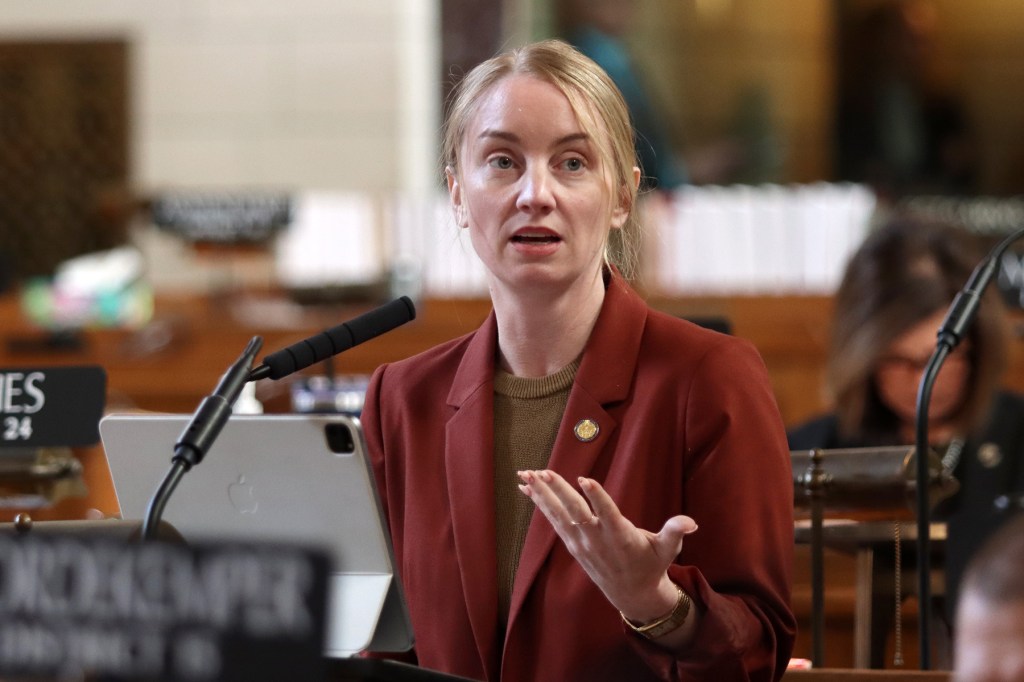
Hunt argued the JDA definition was more “precise” and retains protections for Jewish residents, while avoiding the conflation of antisemitism with criticism of the Israeli government.
That bill, LB 538, was ultimately tabled after Hunt accused the bill’s sponsor, Sen. Brian Hardin of Gering, of making a sexually inappropriate remark to her off-mic during debate.
Pillen’s remark was pegged as “Islamophobic, anti-Palestinian hate speech” by the local advocacy group Nebraskans for Palestine.
The group noted that hundreds of thousands of Palestinians, living in Palestine and around the world, identify as Christian—representing one of the oldest continuous Christian communities.
“Palestinians, including those who live in Nebraska, deserve the same dignity and safety afforded to every other group,” the group said in a statement to Courier Nebraska. “We call on every Nebraska elected official and religious leader to stand up against the governor’s hate speech.”
They added that similar rhetoric has worsened Islamophobia and anti-Arab sentiment nationally, pointing to recent hate crimes in Illinois, Vermont, and San Diego.
The American Civil Liberties Union (ACLU) of Nebraska said they’ve observed a rise in this form of discrimination locally, too, and condemned the governor’s remark and EO as having a possible chilling effect on free-speech.
“Schools must protect students from harassment, but they cannot treat political speech as misconduct simply because the governor or anyone disagrees with it,” said Cassy Ross, policy director for ACLU-NE. “Students absolutely have the right to criticize the actions of our country, or others, without facing discipline. We’ll be watching closely to ensure those rights are protected.”
Ross said ACLU-NE initially supported the legislative version of Pillen’s EO (LB 538), “because antisemitism is real and schools have a responsibility to address discrimination,” but the organization is “looking closely at our past positioning” on the basis of defending free speech for students.
Addressing students who fear First Amendment ramifications from Pillen’s EO, Ross said they are “protected by the rights enshrined to you in our Constitution. You should not change your actions or speech in accordance with this. Your rights are still the same.”
The background
Pillen’s EO builds upon past efforts to apply the IHRA definition in the state. In 2022, then-Gov. Pete Ricketts adopted the definition by proclamation. Over a year later, and just weeks after Oct. 7, Pillen signed another proclamation condemning antisemitism and reaffirming the use of the IHRA definition in the state’s plan to identify any incidents.
To date, 38 states have adopted or endorsed the IHRA definition of antisemitism, according to the Combat Antisemitism Movement.
A federal judge in Texas found in 2024 that state university policies adopting the IHRA definition of antisemitism likely violated the First Amendment by punishing or chilling protected anti-Israel speech. The ruling stems from a challenge to Gov. Greg Abbott’s executive order requiring public universities to use that definition in campus speech policies.
Those student groups were granted standing to sue their institutions’ presidents and board members for alleged viewpoint discrimination and for First Amendment violations.