As President Donald Trump descended on Grand Island, Nebraska, last week to shore up midterm support, state Republicans lined up to capitalize on the visit—except one.
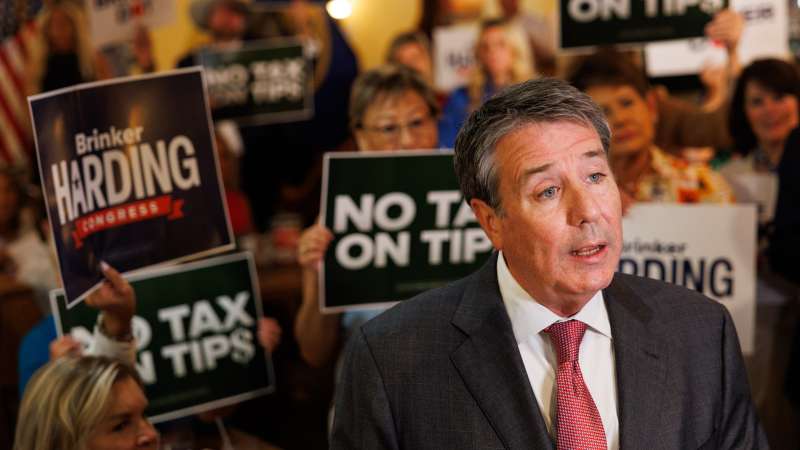
Brinker Harding.
While audience members were given a general edict to support conservative candidates “up and down the ticket,” in fact, the Republican nominee in Nebraska’s 2nd Congressional District race wasn’t mentioned once during the three-hour event.
The silence was as notable as it was deafening, as his race is routinely described by local and national media outlets as “highly competitive” and “crucial” for national Democrats aiming to seize the House in an off-election year.
But Harding’s complete absence from the rally was the latest variation in a delicate dance. To win this November, the Omaha city council vice-chair must balance the president’s unretractable support and teetering approval with an electorate that, while electing a Republican to Congress for 10 years, has rejected Trump twice since 2020.
‘Blue Dot’ paradox
Nebraska’s relationship with the GOP’s modern standard-bearer is generally warm.
Trump won the state each time he sought the White House, defeating Democratic nominees Joe Biden, Kamala Harris, and Hilary Clinton by 19, 20, and 25 points, respectively.
But his win over Clinton marked his last victory in the Omaha-based 2nd district, and thus, his last sweep of Nebraska’s five electoral college votes—due to the state’s quirky method of divvying one vote to each congressional district and giving the remainder (2) to the statewide vote winner.
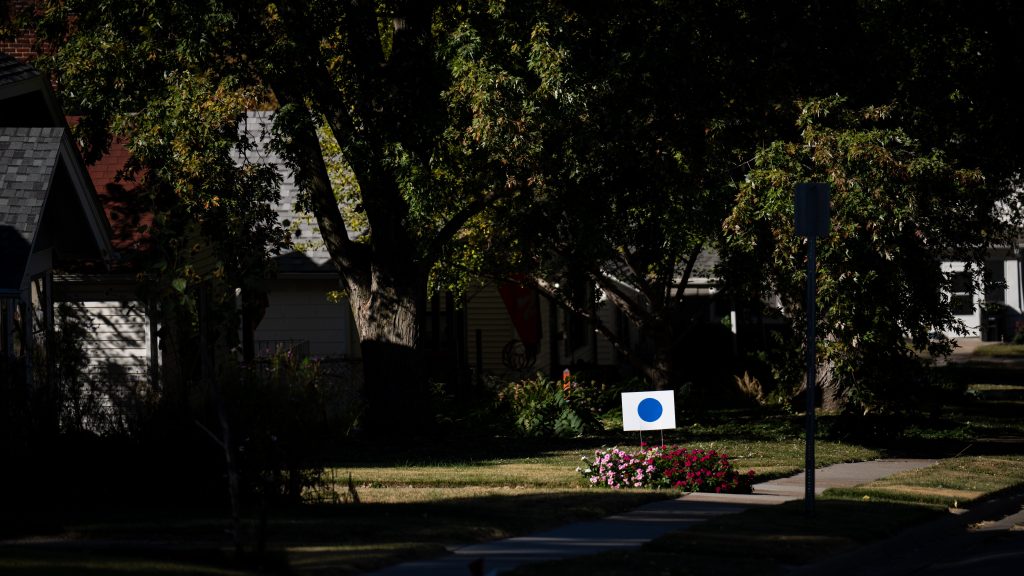
In 2008, Barack Obama made history as the first Democrat to win NE-02 in over four decades, marking the first electoral split in state history. Later district wins for Biden and Harris would become the basis for its “Blue Dot” nickname, nodding to its contrast in the beet-red Great Plains region.
But each time the district chose a Democrat for the White House, it chose a Republican for Congress. Most notably, retiring incumbent Rep. Don Bacon has held onto the seat since his initial election in 2016. His departure opens up the seat for the first time since 1998.
Harding, who advanced through his primary uncontested, navigates a political climate meaningfully different from that which dished up Bacon.
Stamped
According to the latest Economist/YouGov projections, Trump’s net approval rating is underwater nationally by roughly 26 points. That disapproval only bumps up to -17 among Nebraska voters. Further, as Election Day nears, only 25% of registered voters approve of Trump’s handling of jobs and the economy, according to a Financial Times poll.
Meanwhile, voter sentiment and polarization on the president has largely crystalized over the last decade. So the Harding campaign’s decision to omit Trump’s endorsement from his campaign’s website is likely strategic in nature, as opposed to an oversight.
“Brinker Harding has my Complete and Total Endorsement to be the next Representative from Nebraska’s 2nd Congressional District,” Trump wrote in an April social media post. “HE WILL NEVER LET YOU DOWN!”
Harding wrote back that he was “honored” to have the President’s cosign and looked forward to “working with you to Make Life More Affordable and Government More Accountable.”
Nebraska Democrats and their NE-02 nominee, PAC founder and political strategist Denise Powell, have seized on the empirical strategy that Trump ties could be an albatross in the district.
During numerous interviews and campaign events, Powell has characterized Harding as a “rubber-stamp” for Trump and the national GOP.
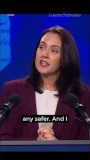
It’s a claim Harding has rebutted. He addressed the attack directly in a September social media video, saying “that’s not true.” The question also came up Sunday during a televised congressional debate on KETV between Harding and Powell.
As evidence, Harding lists disagreements with Trump over his Argentinian beef-import deal, a floated one-time $5,000 “Trump Dividend” check, and the president’s barring of certain media outlets from the White House Press pool.
While substantive, Republican dissents on these subjects have not been uncommon, positioning Harding as a softer maverick than Bacon developed a reputation of.
But rocking the boat early can be risky for office hopefuls. Without doing so, national GOP surrogates like House Speaker Mike Johnson and majority whip Steve Scalise have flown to Omaha to stump for Harding.
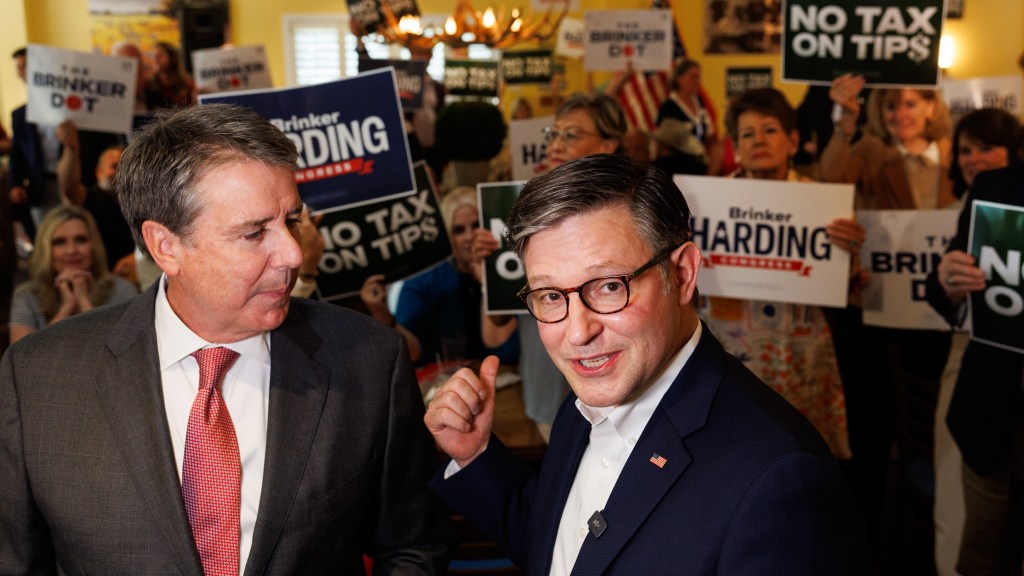
Their rallies often headline policy platforms within Trump’s landmark tax and spending package known as the “One Big Beautiful Bill,” which became law in July 2025.
Celebrating its signing, Harding said the President’s colossal reconciliation bill would usher in “a new golden age”
Lost in the shuffle?
Despite projecting electoral confidence, national Republicans may be reconsidering their investment in helping Harding make his nuanced pitch for Congress.
The House GOP’s major campaign arm recently removed $1.1 million in ad buys for Harding through the Nov. 3 election. National Democrats followed suit, nixing $1.1 million in NE-02 ads, too. In response, Harding’s campaign told the Omaha World-Herald that he looked forward to “earning every vote between now and Election Day.”
The paring back of funds may color Harding’s decision not to attend Trump’s Grand Island rally. A campaign spokesperson told ABC News the rally absence was due to “previously scheduled events.”
But a campaign suddenly down more than $1 million would reasonably want the free exposure and shoring of support—whether the venue is in-district or not.
Unless that connotation presents a different obstacle.
The Harding campaign did not respond by deadline to Courier Nebraska’s written questions about the president’s endorsement not appearing on his website and the nature of his absence from the Grand Island rally.
As the Nov. 3 midterm election quickly nears and voters begin returning their mail-in ballots, Harding threads a needle.
Get too close to Trump, risk the district’s split-ticket voters who preferred Harris but saved Bacon in 2024. Get too far, risk the core base that reshaped US politics a decade ago this fall.