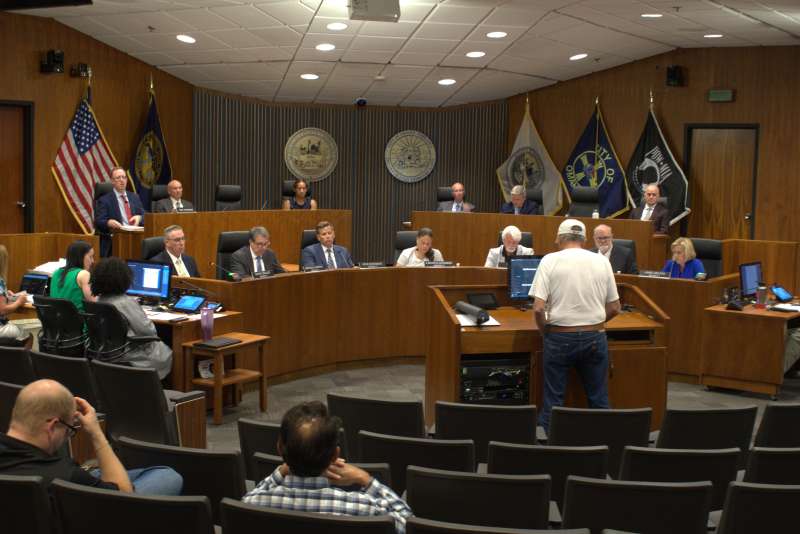
The Omaha City Council voted Tuesday to pass a citywide minimum wage ordinance, restoring the original language of the voter-approved 2022 ballot initiative for Omaha workers and likely teeing up a legal dispute with the state.
The ordinance, introduced by Council President Danny Begley, was narrowly successful. It passed on a 4-3 party-line vote on the officially nonpartisan board, with all no-votes coming from Republicans, who voiced skepticism about the city’s legal authority to implement the measure.
The ordinance now awaits approval from Omaha Mayor John Ewing Jr., who told KETV in a statement that he wouldn’t “weigh the legal considerations” and would “respond later.” Begley previously told Courier Nebraska he was “confident” the ordinance would win the mayor’s support.
Those legal considerations were the crux of debate on Tuesday among the council, referring to the pushback a similar ordinance passed by the Lincoln City Council received from Nebraska Attorney General Mike Hilgers, who opined that the move conflicted with the state’s constitution.
The City of Lincoln submitted its brief arguing against the AG’s request for a temporary injunction over their ordinance on Friday.
As it stands, Nebraska’s minimum wage rests at $15/hour, as dictated by the 2022 initiative which passed statewide by 59.4%. In Omaha, approval was over 70%.
Once the ordinance goes into effect this October, the wage floor in Omaha will adjust yearly to the cost-of-living, based on the Consumer Price Index for All Urban Consumers (CPI-U) for the Midwest Region. The ordinance also eliminates a subminimum wage for youth workers.
Begley told Courier Nebraska he introduced the ordinance in response to state lawmakers amending the 2022 initiative earlier this year, creating the lower wage for young workers and significantly capping annual cost-of-living increases to 1.75%.
Competing arguments
Councilwoman Aimee Melton, who represents District 7 in northwest Omaha, began debate by arguing that the issue had “nothing to do with minimum wage,” but rather “whether Omaha has the authority” to pass the ordinance. Her argument echoed objections from Hilgers, who says labor practices are a matter of statewide concern and therefore cannot be regulated differently by individual cities.
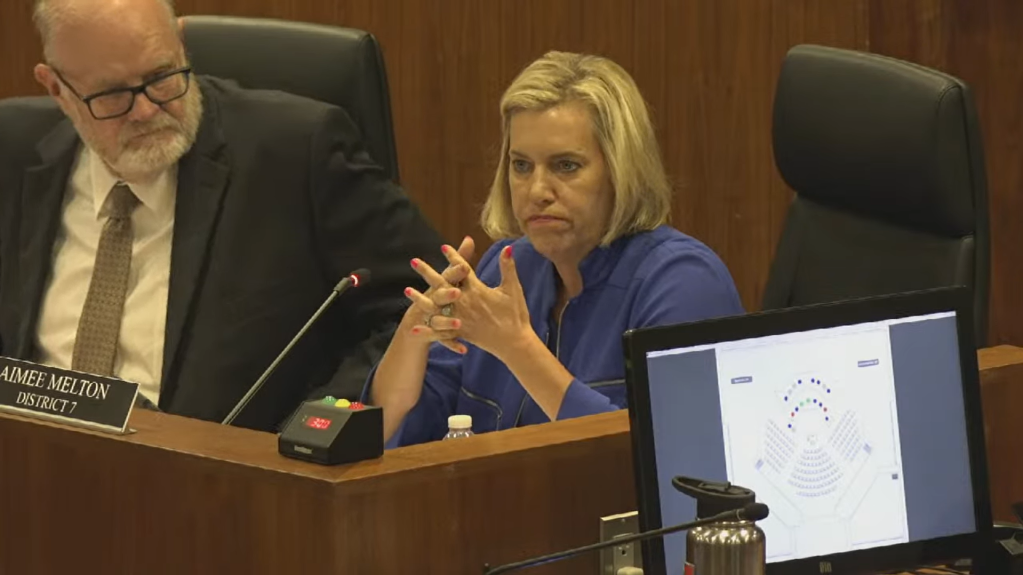
Both Omaha and Lincoln operate under a home rule charter, which generally allows municipalities to manage their own affairs with a high degree of autonomy, instead of being strictly governed by state statutes. Although, that authority is not boundless.
“We don’t have the power and we don’t have the authority,” Melton told her colleagues Tuesday. “And to just say, ‘I’m going to do it anyway because it’ll get me a pat on the back and a big rah-rah from people,’ that’s not how our government works.”
Citing case law and legal concerns, Melton introduced a motion to delay implementation of the ordinance. That motion failed on a 3-4 vote.
Councilwoman LaVonya Goodwin of District 2 introduced a separate motion to delay the ordinance’s effective date until June 2027, but it did not receive a second and never went to a vote.
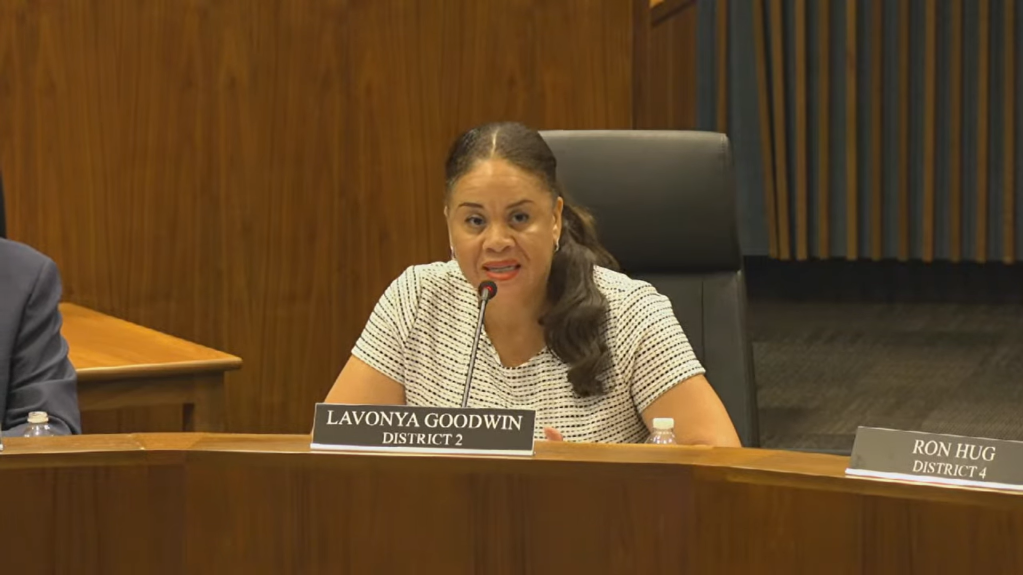
Goodwin argued that a longer runway for implementation would aid businesses and Omaha’s Human Rights and Relations Department, which would enforce the ordinance, in preparation.
“But I also want to say that there is an urgency for the voters’ voices to be heard, and that’s also what’s in question,” said Goodwin. “That’s the complexity of where we sit today.”
Councilman Pete Festersen of District 1 cast doubt on the state’s supreme authority for lawmaking, citing the city’s yearslong legal fight over gun regulations in which Omaha prevailed in court.
“We passed those ordinances. We did get sued, but we won,” Festersen said. “Fighting for minimum wage rises to that occasion for me.”
“The question is whether Omaha, Lincoln, or any other city of a similar class, is allowed to become a super state,” said Councilman Don Rowe of District 5. “I think that we serve at the pleasure of the state.”
Councilman Brinker Harding of District 6, the 2026 Republican nominee for Nebraska’s 2nd Congressional District, did not support the ordinance but engaged City Attorney Matt Kuhse with several questions about the legal issues at play.
Kuhse said if the ordinance is signed by the mayor, the state would likely seek a preliminary injunction to block Omaha from enforcing it while the case proceeds.
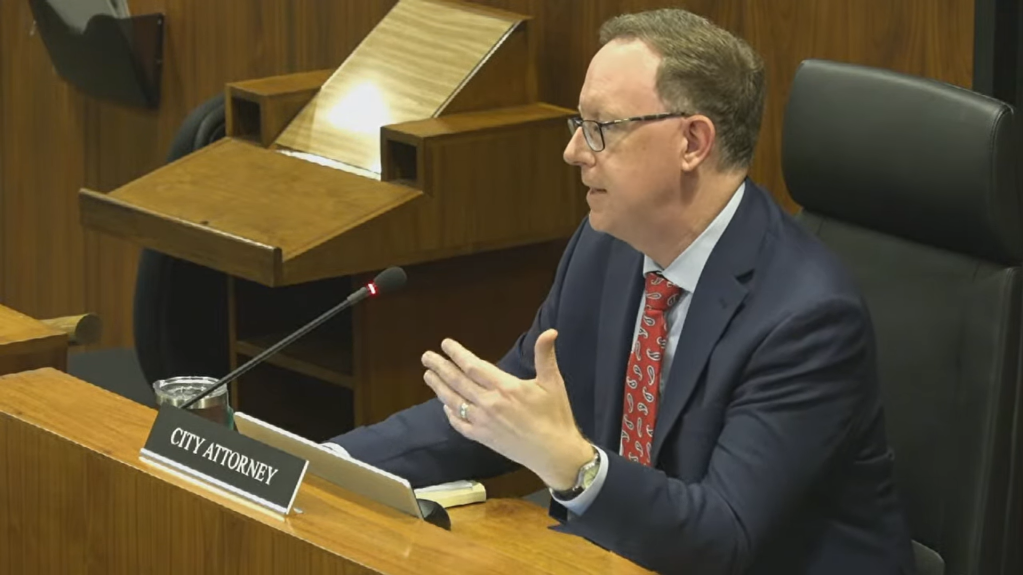
Referring to legal arguments teased by Melton, Kuhse said both competing theories have merit. A judge could find that the state has the exclusive authority to determine minimum wage practices, or could find that Omaha has enough home-rule power to set higher local standards, Kuhse said.
“There are two competing arguments here. I don’t think that it is as clear as Councilmember Melton suggests,” Kuhse added, saying any lawsuit would likely climb to the Nebraska Supreme Court.
“My peers have spoken quite eloquently about the oath of office we take to uphold the constitution,” said Councilman Ron Hug of District 4. “But that’s secondary to how we get here. We get here because our constituents send us here and believe we’ll carry out their wishes… I think my constituents are at least entitled to their day in court.”
“Worth fighting for”
Council President Begley began his remarks thanking those who testified in support of the ordinance during a June public hearing, gesturing to handwritten cards given to him which voiced support.
“In respect to the opposition,” Begley said. “The primary question before us is: Can Omaha do this? And should Omaha do this? The answer to both is yes.”
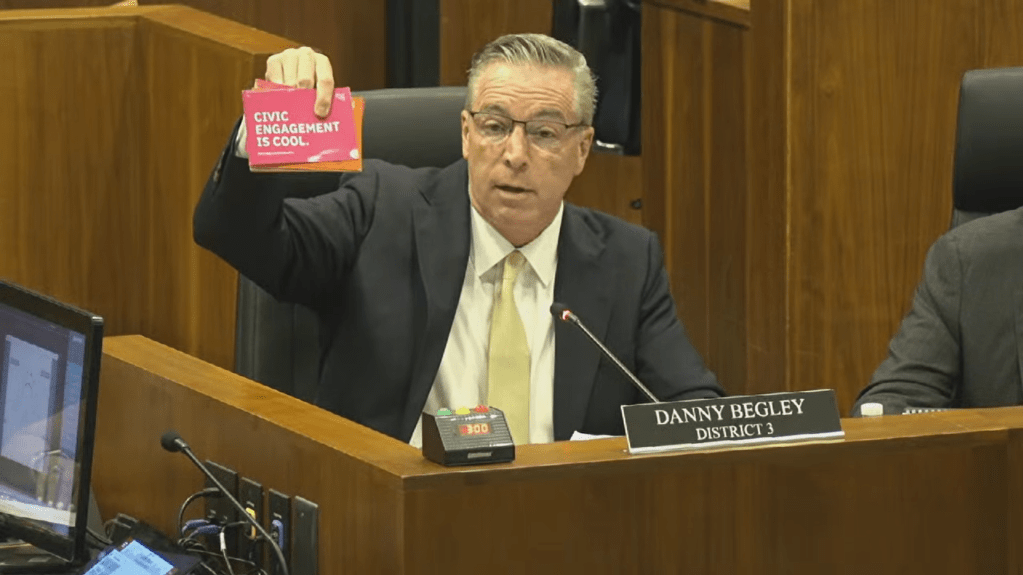
Defending the ordinance, Begley argued that Omaha has a higher cost of living than other Nebraska cities and that the measure would comply with state law because minimum wage standards typically operate as a floor, not a ceiling.
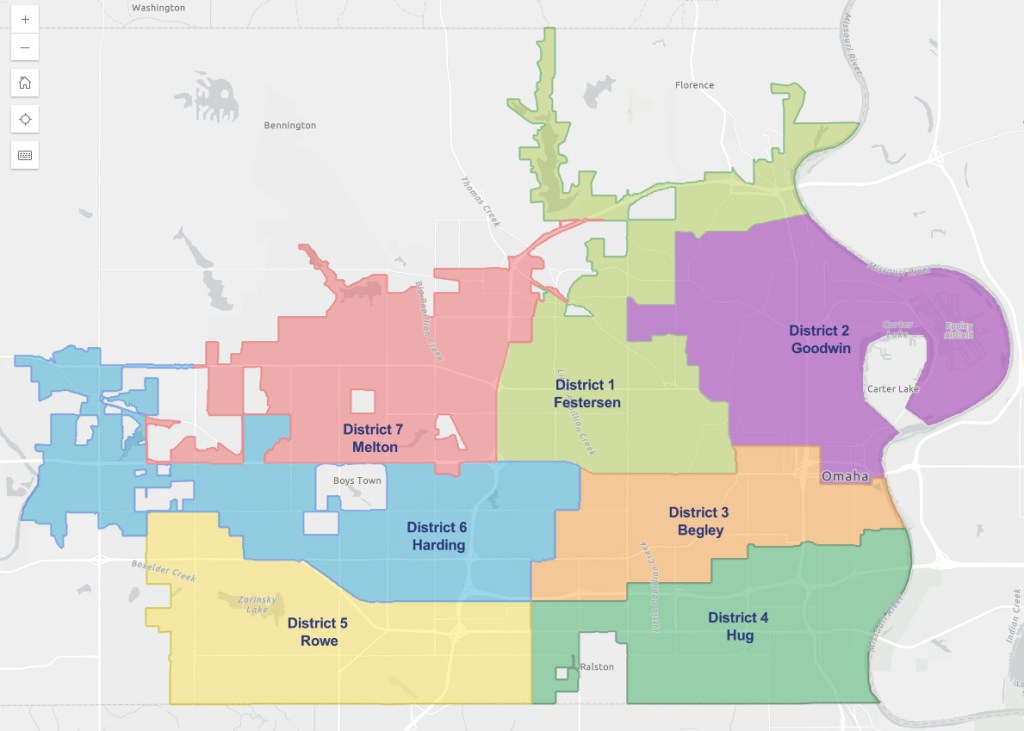
The IBEW Local 1483 union leader also took a moment to note how the 2022 initiative was received in each council district:
- District 1 (Councilmember Festersen) – 75% approval
- District 2 (Councilmember Goodwin) – 85% approval
- District 3 (Councilmember Begley) – 78% approval
- District 4 (Councilmember Hug) – 74% approval
- District 5 (Councilmember Rowe) – 62.5% approval
- District 6 (Councilmember Harding) – 63% approval
- District 7 (Councilmember Melton) – 67% approval
- Omaha citywide total – 70.2 approval (nearly 11% higher than the statewide total)
“No matter what happens with the politics being played, I’m proud to keep my word to my constituents and fight for—and with—working families in Omaha,” Begley said.
Dialing his Irish heritage, Begley offered a modern parable to illustrate his doggedness:
A man arrives at the gates of heaven and asks to be let in. St. Peter looks at him and says, “Of course, just show us your scars.”
The man replies, “I have no scars.”
St. Peter then sadly looks at him and says, “What a pity. Was there nothing in life worth fighting for?”
“I want the voters to listen clearly to me. I am fighting for you, not for a pat on the back, but because I heard what you said… I’m saying yes to you. I wanna fight for you. And that’s why I brought this ordinance forward.”
The ordinance passed 4-3, with Harding, Melton, and Rowe voting against it. Begley was the deciding vote.
The dozen or so residents watching from the gallery celebrated quietly, exchanging smiles and hushed comments.
Reaction
Hilgers’ opponent this November, Democratic nominee Jocelyn Brasher said she wouldn’t be surprised if Omaha is sued next by the Republican AG.
“If he chooses to sue Omaha, he will once again be using taxpayer dollars and the limited resources of the Attorney General’s Office to challenge the will of Nebraska voters, rather than focusing on the office’s core mission of protecting Nebraskans and defending consumers,” Brasher said.
Lincoln City Councilman James Michael Bowers, who spearheaded a similar ordinance, said he was “thankful.”
“Congratulations to the Omaha City Council for coming along board in making sure that people are respected at the ballot box,” Bowers told Courier Nebraska. “We are not going to be intimidated by the Attorney General. If they want to continue restricting the will of the voters at the ballot box, then they’re gonna have to go through us.”