When the weather’s nice, some people go for a stroll in the park, some folks take a dip in the pool, and the sportier among us hit up their friends for a lively game of basketball. Others still hit the fields for a round of sightseeing.
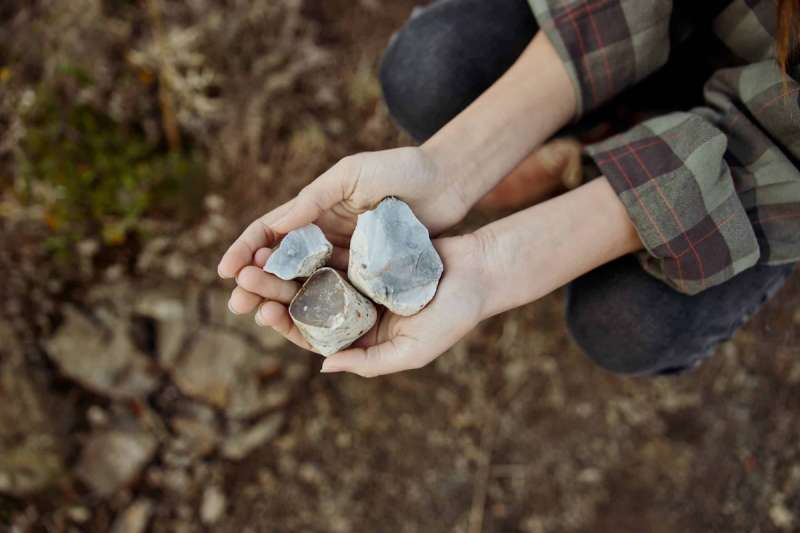
No, we don’t mean literally, but you do need to keep your senses sharp when rock hunting. Also known as rockhounding, rock hunting is, simply put, the search for unique rocks, including agates and gemstones. Finding a unique shape or a rare color of stone can be exhilarating, and it takes a lot of patience, which makes the reward that much sweeter.
Rocks are everywhere, so this hobby is rather universal. And that’s great news because you don’t have to leave our beautiful state to uncover a bounty of beautiful stones, each of which will come with its own story for you to share and remember forever. So, strap on your gloves and headlamp because we’re spelunking down into the depths of this hobby, including the legality of it, which rocks are native to Nebraska, excellent places to hunt rocks in the state, and more.
Where is it legal to go rock hunting in Nebraska?
You might be excited to jump right into rock hunting, but you first need to know which lands across Nebraska you’re able to scout for those precious nuggets. Rock hunting is generally legal in the state, and it goes without saying that any property you own is available to be searched for unique or rare finds. However, you need to be extra cautious when searching other private property. If you want to search around someone else’s house—say, your neighbor’s—or the lot of a business, you must request permission first. If they give you the go-ahead, then you’re free to boot, scoot, and boogie all over the dirt.
There are also guidelines you need to study if you plan to hunt rocks on any of Nebraska’s protected forests or grasslands. According to the United States Department of Agriculture, general rock hunting for recreational use is legal on protected lands; however, nothing found can be sold for a profit, and there are limits to what you can take. Rocks and agates get the green light, but meteorites, fossils, and artifacts (items from “prehistoric or historic human life or activities,” like ancient pottery) are a firm no.
These forests and grasslands come with one additional caveat: You can only take so much per year. More specifically, you’re allowed to claim up to 25 pounds in a single day, but you may not exceed 250 pounds of rocks per year. We know it’s a bummer, but this limit is probably best for your back!
Rocks you may unearth in Nebraska
If you’re going to be a successful rock hunter, you need to know what you’re looking for. Here are the most common and the rarest rocks in Nebraska:
Common rock finds
Before you can focus on finding rare rocks, you need to know which ones you’ll be seeing the most often. Luckily for us, this topic has been studied for quite a while. Dr. Raymond Burchett, a research geologist and professor at the University of Nebraska-Lincoln, published an identification guide in 1968.
According to Dr. Burchett, some of the most common rocks in Nebraska that you might already recognize include coal, limestone, sandstone, volcanic ash, flint, and granite. However, there are many other common rocks you’ll want to brush up on so you can easily identify them.
For one, shale is found statewide and comes in many colors, including black, yellow, red, grey, green, and blue. Pyrite can also be found in similar colors and across the entire state. Then, there’s ironstone, which is dark brown and located primarily in the eastern portion of the state. On the western side of Nebraska, you may encounter prairie agate, a quartz that can take on many different colors.
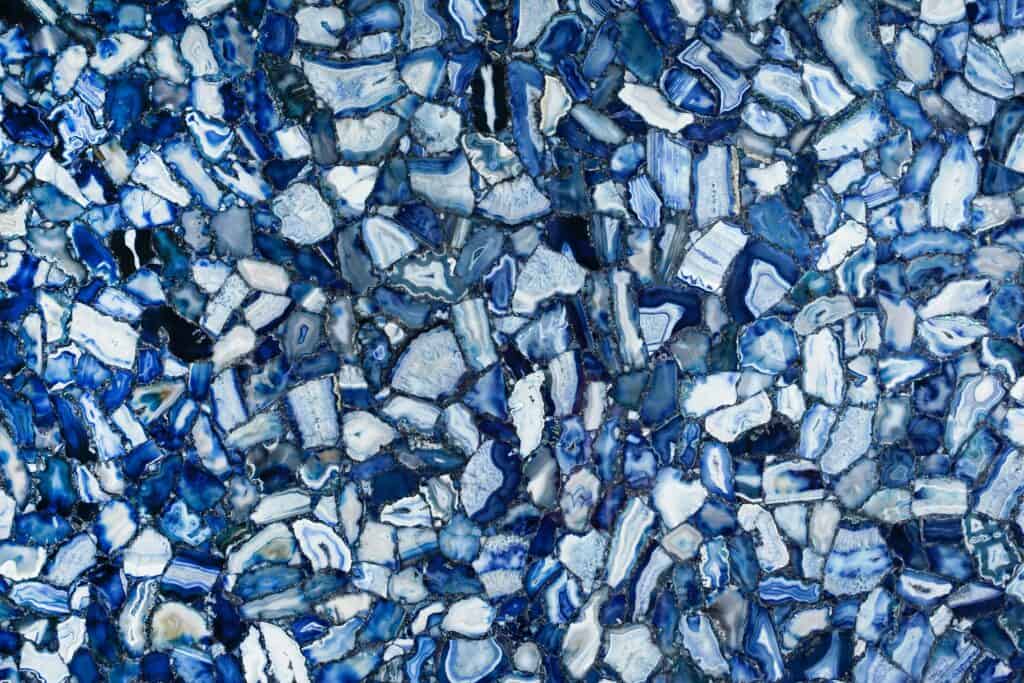
If you find a pink, purple, or red stone in the east, it may be Sioux quartzite. Meanwhile, if you see blue stones in the west, you may have unearthed a chunk of blue agate, also known as blue chalcedony.
Rarer rock finds
You’ll find your fair share of the aforementioned rocks, but the following stones may prove a bit more challenging to dig up. First, there’s Lake Superior agate, a stone that’s iron-colored and normally found around its eponymous Great Lake. It’s found in Nebraska from time to time thanks to some of it traveling from the Midwest via glaciers, but it’s certainly on the rare side (via Rockhounding.org).
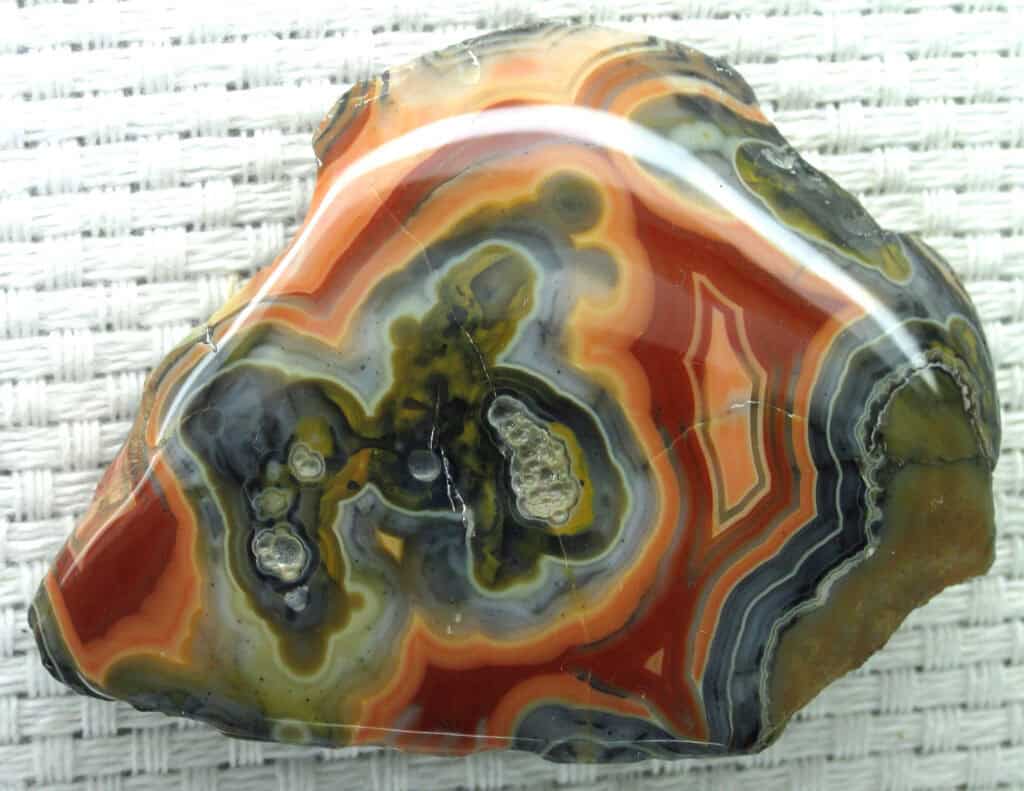
Similarly, there’s Fairburn agate. This one gets its name from the eponymous town in South Dakota, and it leans reddish-brown in color but may have swirls of green, black, and white as well. It’s native to the middle of the country, but it’s not common to see it in big chunks or close together.
One of the most beautiful stones to be unearthed in Nebraska is celestite, also known as celestine (via Rock Seeker). This light-blue crystal is a dream, resembling the sky in stone form. That might sound too good to be true, but it’s absolutely real—and rare. Don’t expect to find this on your first outing, but do know that it’ll be a great day if and when you find a piece.
Calcite is an interesting one to hunt because it’s rare and common in different sectors of the state. You can find this tan-colored stone in the southeastern and northwestern portions of Nebraska. It sounds strange because those are exact opposite sides of the state, but you’ll just have to trust on this one. (When in doubt, blame the glaciers!)
Some of the rarest rocks to be found in Nebraska include vashegyite, gibbsite, alunite, aluminite, and felsobanyaite. “These are really exotic by Nebraska standards. The list of minerals of Nebraska has really expanded since we started doing this kind of research,” geologist Matt Joeckel from the University of Nebraska-Lincoln said upon these rocks’ discovery in 2011, per via Streetwise Reports.
Other finds
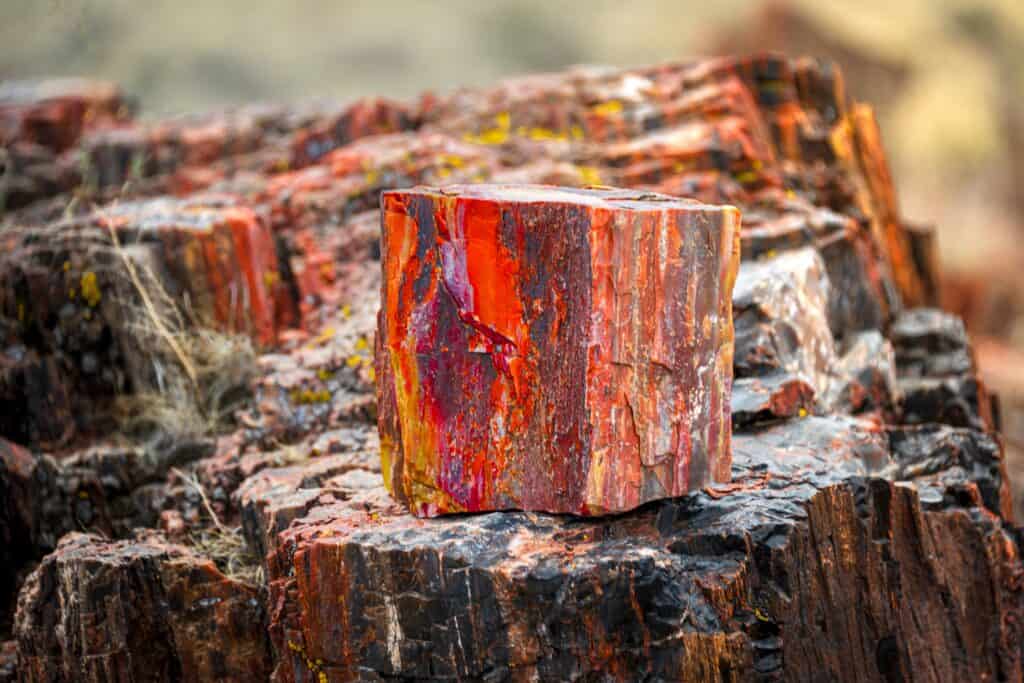
In addition to rocks, your new hobby may lead you to interesting finds like petrified wood and Ice Age-era fossils. Yes, really! Petrified wood is exactly what it sounds like: Parts of trees become preserved in natural agents like ash or sand, and they harden and become living relics of the past. Petrified wood is typically brown, but you may also see it in shades of black, red, yellow, or white, according to Nebraskaland.
On the other hand, you may stumble upon relics from even further back in history. What we know as the Ice Age is known to scientists as the Pleistocene, and it’s a period of history that started some 1,800,000 years ago. To think that we could find pieces of animals from that time is mind-boggling, but it’s true.
It turns out that ice is really great at preserving bones, and as glaciers moved across modern-day Nebraska, they deposited them, only for us to find them thousands and even millions of years later. The bones people find today from this era are believed to be from camels, bison, horses, and elephants, among other similar animals.
Feel like a rock(star) at these great hunting spots across Nebraska
Finding unique rocks is never guaranteed, but here are some hotspots that hobbyists have reported frequenting:
Chadron
Located in Dawes County, Chadron is surrounded by badlands that make pretty great rock-hunting territory, per RockhoundingNear.com. This area is known for vibrant rocks, including chalcedony, jasper, agates, and more. You can also find petrified wood here if that’s something you’re interested in.
Oglala National Grasslands
The Oglala National Grasslands are a favorite for local rock enthusiasts. The grasslands stretch far and wide, and they have so much to offer that folks often camp here and spend a few days rock hunting at a time. This area is particularly interesting because erosion has led to many rocks in the area looking like mushrooms in shape (via Brittanica). Other finds here include petrified wood, Fairburn agate, jasper, and quartz, among others.
North Platte River
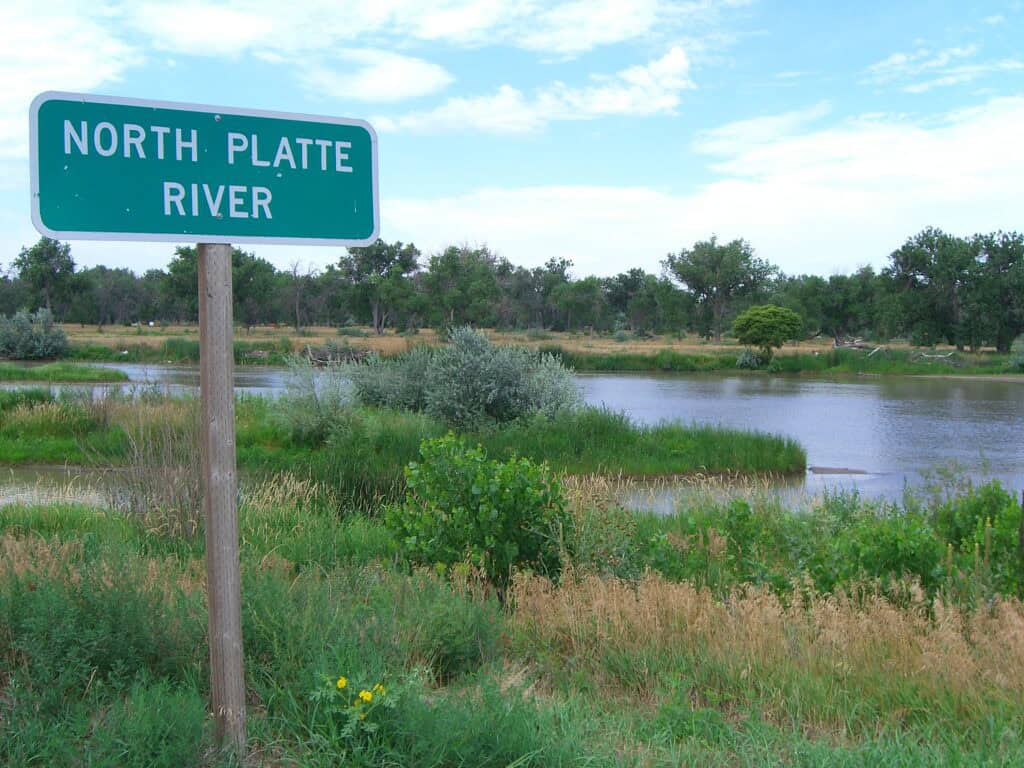
The North Platte River is more than 700 miles long, and it’s a great spot to frequent if you’re interested in finding fun rocks. Quartz, chalcedony, jasper, and agate are common occurrences along the river, but rarer rocks can be found from time to time. For instance, one Redditor found three botryoidal agates along a section of the river in Colorado. Who knows if some more of that rock is sitting riverside in Nebraska, too?
Palmyra
Located in southeast Nebraska near the Iowa border, Palmyra is a tiny village with big rock-hunting potential. Your usual candidates—quartz, agate, chalcedony—can be found here, but you might uncover different takes on them. For example, moss agate is native to the area, and its stunning emerald-green sheen is something you’ll definitely want to have in your collection. Plus, the conditions in Palmyra aren’t too severe, making this a perfect spot for rock-hunting beginners, per RockhoundingNear.com.
Lodgepole Creek
The Lodgepole Creek branches off of the South Platte River, but there are some unique rocks found here that you may not unearth if you don’t also branch out. Petrified wood, jasper, and agates are common along the creek, but you’ll also stumble upon chert—a crystalline quartz not found in many other places throughout the state. It’s often found in shades of white and gray, but you may also see it in shades of dark red, brown, and even light green in rare circumstances.
Rock hunting essentials (so you don’t get off to a rocky start)
Rock hunting isn’t a hobby to take up unprepared. First, make sure you have a heavy-duty water bottle. Staying hydrated is essential. In that same vein, always wear sunscreen. Spending extended hours under the sun in search of rare rocks can lead to nasty sunburns—or worse if you’re not careful. A hat also helps!
You’ll also need a powerful flashlight to ensure you get the best look at the rocks you find. This will also allow you to continue hunting as the sun sets. We’d also recommend rechargeable ones, like the Kmivo Rechargeable LED Flashlights, which you can charge on the go with a portable charger instead of keeping track of batteries. Or, if you want to free up your hands completely, you can opt for something like the Aikertec Rechargeable Headlamp.
Naturally, part of the fun of rock hunting is taking home your stash. To keep your finds organized, bring a bag with you. A regular backpack or satchel works fine, but specialized bags that sit around your waist, like the Trilvix Rock Collecting Waist Bag, also help with easy maneuvering and storage.
Finally, you’ll need your handy-dandy equipment. Think chisels, a hammer, goggles, and the like. You can purchase these individually, or you can reach for a set that comes with all of the pieces, like the Incly Geology Rock Pick Equipment Kit.
This article first appeared on Good Info News Wire and is republished here under a Creative Commons license.
READ MORE: What to know about Omaha’s newest free garden: Polina Gardens