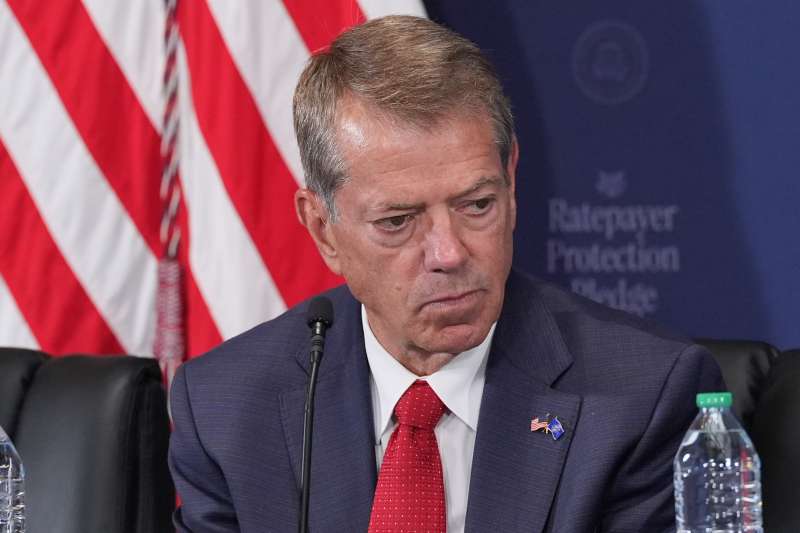
Since 2021, data centers setting up shop in Nebraska have avoided about $519 million in property taxes through exemptions meant to incentivize the industry. This year, Google has plans to open its largest data center in the state, but Gov. Jim Pillen is changing his stance.
In July, Pillen issued an executive order blocking new data centers from receiving tax incentives under the ImagiNE Nebraska Act and establishing a task force to make recommendations on data centers to legislators. This came after at least a dozen counties established moratoriums on new data centers and statewide lawmakers advanced legislation aimed at regulating the burgeoning industry.
While those moves might seem prudent on their face, environmental advocates point out they’re at odds with Pillen’s earlier stance on the matter.
“The governor’s sudden concern about data centers wasn’t in existence back in April when the bill was being debated,” said Ken Winston, director of the Nebraska Chapter of the Sierra Club.
These debates are being held in the leadup to the November midterms, and Pillen has accepted $65,000 in campaign contributions from one of the big players in the data center game banking on Google’s proposed expansion: Nebraska-based Tenaska, one of the country’s largest privately held energy companies.
Now, Nebraskans have to wonder whose side Pillen is on when they head to the polls in November.
Pillen’s changing stance on data centers
Last year, Pillen was full-steam ahead on data centers in the state. This year, Pillen is seemingly pumping the brakes on data centers, removing the tax incentives and establishing a task force “so that we’re not giving the farm away in the form of our land, water and electricity,” Pillen said in a release.
This spring, Pillen signed two major laws regulating data centers: LB1010, the Large Load Customer Regulation Act, and LB1261. Together, the laws require new data centers to supply their own energy. Republican Sen. Barry DeKay, who sponsored LB1261, told Nebraska Public Media that the move was aimed at protecting residents.
“It will keep public power ratepayers protected from having to build (energy) generation that they won’t be able to use, that they won’t benefit from,” DeKay said. “It puts all the financial onus on the private entity that’s building it, whether it be a data center or whoever. They will pay for the cost of construction. They will maintain the infrastructure.”
Tyson Slocum, director of Public Citizen’s Energy Program, said that’s an oversimplification of how data centers impact residents.
“Data centers are coming in and basically, you know, scurrying for that same labor and that same equipment set, and it results in increased prices for Nebraska utilities to procure,” Slocum said. “Building your own generation doesn’t necessarily shield ratepayers from any harm.”
On top of that, environmental experts point out that the laws don’t require data centers to use a particular type of energy, meaning they could choose to rely on precious fossil fuels.
Winston is also skeptical of the task force.
“His task force that he’s appointed is all promoters of data centers,” he said. The task force includes representatives from energy and utility companies as well as the CEO of Tenaska.
Tenaska is the named power supplier for Google’s proposed data center in southeast Nebraska, the largest in the state to date. Already the company has optioned 2,600 acres of land near Gage County. Last year, it gave Pillen $65,000 toward his reelection campaign. During his first run for office in 2022, the company gave $27,000.
So how consumer-friendly are the measures to regulate the industry, remove tax incentives and establish a task force if Pillen is also receiving campaign funds from Tenaska, which still stands to gain?
“It’s for show, but it doesn’t really have a legal impact,” Winston said of the governor’s executive order.
In a release announcing that executive order, Pillen said,“Mind you, this is not a complete ban on data centers. I know some communities would prefer that, but I strongly believe in free enterprise and the ability of local communities to make decisions best suited to those who live there. That said, going forward those projects must meet the guardrails spelled out in that order before going into business.”
“He’s definitely trying to cover his tail from every direction,” Winston added.
As the race for governor heats up, Pillen’s opponent, Democratic candidate Lynne Walz, is latching onto the discrepancies in his take on data centers.
“Less than four months ago, he was lobbying senators to pass these same incentives,” Walz wrote in a statement to Nebraska Public Media. “We are tired of politicians saying one thing and doing another.”
READ MORE: Who’s on the Nebraska Data Center Task Force? A closer look at the members and their ties