Politics

Nebraska’s Winnebago Tribe reclaims sovereign land

More than 50 years after the land was condemned by the U.S. Army Corps of Engineers, the Winnebago Tribe has regained 1,600 acres in northeast Nebraska under a federal land transfer signed into law in 2024.

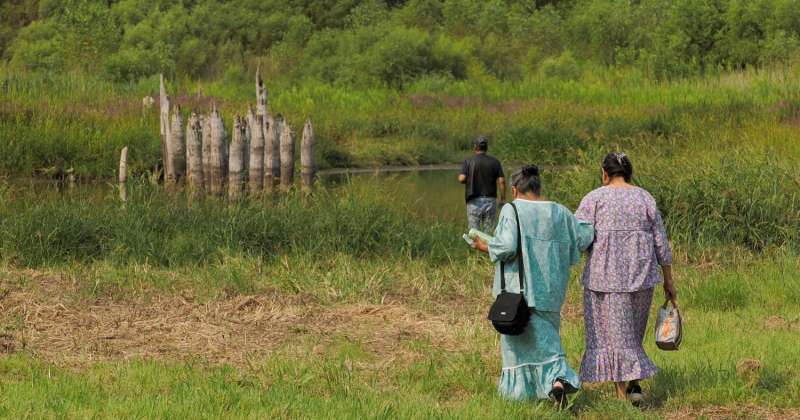
Members of the Nebraska Winnebago Tribe recently celebrated the return of 1,600 acres of land once condemned by the U.S. Army Corps of Engineers more than 50 years ago. (Winnebago Tribe of Nebraska)

The federal government has officially returned 1,600 acres of land to the Winnebago Tribe in Nebraska once condemned by the U.S. Army Corps of Engineers more than 50 years ago.

The area was supposed to be turned into a recreational water park but will now be left in its natural state and governed by the tribe. The Winnebago Treaty of 1865 created a reservation for the tribe but 54 years ago, the U.S. Army Corps of Engineers used eminent domain to condemn the land. It remained so until the Biden administration signed the Winnebago Land Transfer Act in 2024.

Eugene DeCora, vice chair of the Winnebago Tribe of Nebraska, said the tribe recently celebrated the land’s official return, emphasizing the land is important to the sovereignty of Native people.

“It’s upholding the treaty right, the Treaty of 1865, which we stand on, which gave us the land to thrive, raise our children, live with our grandparents, live amongst ourselves,” DeCora explained.

DeCora noted the land in the northeast corner of the state is used for hunting and fishing, and will stay in its natural state, known for its world-class white-tailed deer, which are now hunted with bows rather than rifles.

“It actually improved the herd’s numbers. We have much more healthy, quality deer now, getting back our award-winning bucks. People come from all over the country to hunt in our area,” DeCora pointed out.

The tribe is working with the Iowa Department of Natural Resources on the tribal land just across the Missouri River to take the same approach, keeping the herds and the land healthy and sustainable.


Keep Courier Nebraska free for everyone

If you found this story useful, would you consider supporting Courier Nebraska?

Every day, our team works to provide Nebraskans with free, fact-based reporting about the issues, policies, and decisions shaping life across the state. We believe everyone deserves access to trustworthy local news—not just those who can afford a subscription.

That's why you'll never hit a paywall here (though we may ask you to sign up for our newsletter). But keeping our journalism free depends on readers who believe informed communities are worth investing in.

If our reporting has helped you better understand what's happening in Nebraska, please consider making a donation today. Every contribution helps us continue reporting, informing, and serving communities across the state.

Chase Porter
Chase Porter Political Correspondent
Support our team

Categories:

Authors

  • Public News Service is an independent, member-supported news organization providing “news in the public interest” through a network of independent state newswires.