A Nebraska petition aimed at protecting other citizen-led initiatives from lawmaker interference is one step closer to the ballot box.
The proposed measure from the group Respect Nebraska Voters would raise the vote threshold necessary in the legislature to make any changes to laws adopted by a vote of the people. Currently, 33 votes are required. If the measure is certified and approved at the ballot box this November, that requirement would jump to 40 votes in Nebraska’s 49-member legislative body.
Or, plainly, the threshold would raise from ⅔ of the state legislature to ⅘.
Further, that same 40 vote threshold would apply when passing new laws regarding the initiative and referendum process, and places “additional protections around the people’s ability to bring initiatives.”
Certification is likely. The ballot measure aims to amend the state’s constitution, which carries a higher signature requirement than those aimed at changing normal state laws.
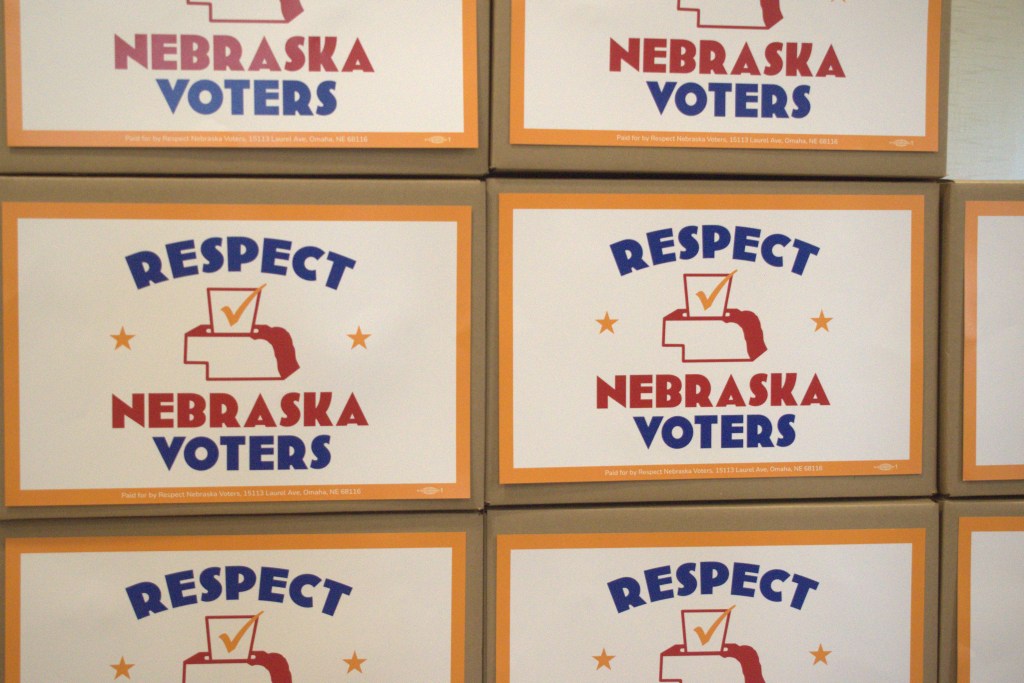
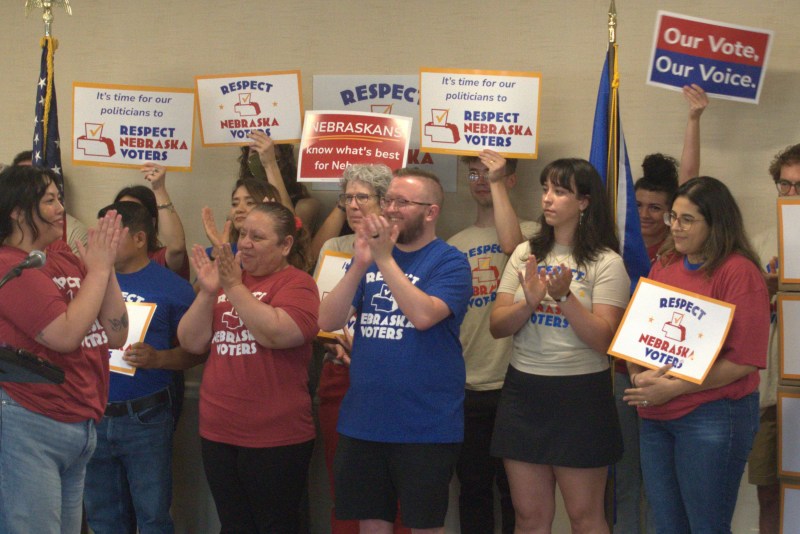
Announced on Thursday at the Cornhusker Hotel in downtown Lincoln, the group turned over more than 186,500 signatures to the Secretary of State’s office for verification. Roughly 125,000 must be accepted to qualify for the ballot this fall.
This trove of signatures must also include at least 5% of registered voters in 38 of the state’s 93 counties. The group said they collected signatures in every county beginning in January.
Jo Giles, a former Omaha TV journalist and executive director of the Women’s Fund of Omaha, serves as one of the campaign’s sponsors. She also sponsored 2024’s Paid Sick Leave Initiative, which passed with support from over 74% of voters before lawmakers created exemptions for young employees, agriculture workers, and small businesses. It’s estimated the move removed protections for about 140,000 workers in the state.
“That is why I’m here today,” said Giles. “Too many politicians think they know what’s best for Nebraskans, that they know better than the people that elected them. But Nebraskans know what’s best for Nebraskans. And after we vote, they should listen.”
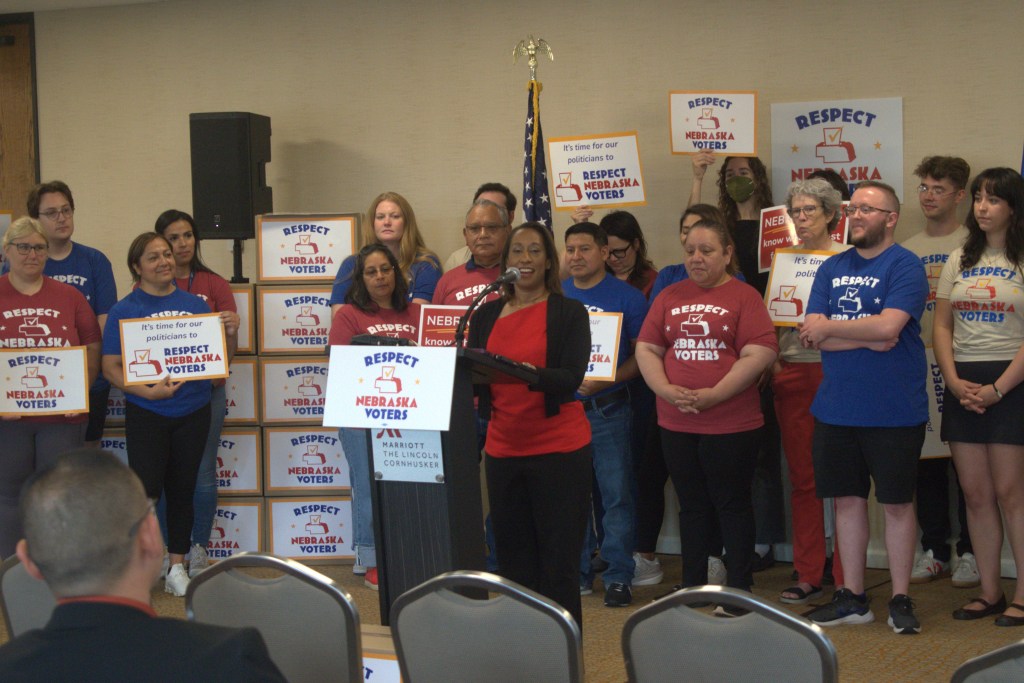
This isn’t the only recent voter-enacted law altered by lawmakers, Giles noted. Lawmakers also approved substantive changes to 2022’s petition to raise the minimum wage and 2024’s ballot question legalizing medical cannabis.
“We’re sending a different message to our state lawmakers: respect Nebraska voters,” Giles said, noting that the initiative has support from the Nebraska State AFL-CIO, Heartland Workers Center, Voices for Children in Nebraska, the League of Women Voters, and other civic groups. “This November, let’s make it clear that we, as the Second House, deserve respect.”
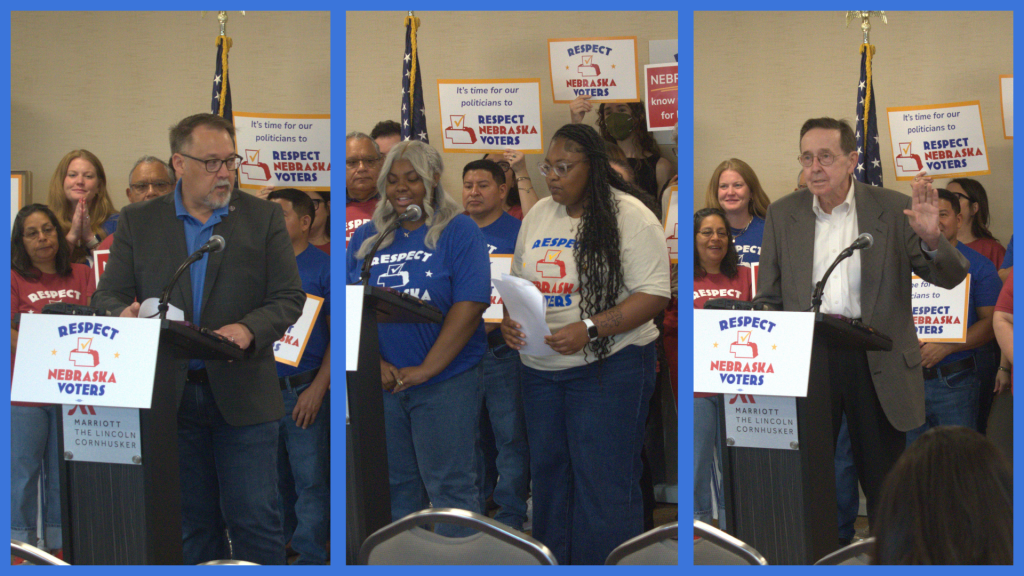
“Through the ballot initiative process, working Nebraskans have the freedom to make decisions for ourselves,” said Mike Gage, state AFL-CIO President and Secretary-Treasurer. “We need to protect that freedom.”
Two 16-year-old workers from Omaha—Tayviana Robinson and Tamiyah Wright—also spoke in support of the measure, particularly frustrated by lawmakers muddling the minimum wage initiative.
“We hear all the time that young people are the future, but politicians don’t treat us that way,” they said. “We can’t vote yet, but when we can, we should be able to know that our votes matter… This initiative is a good place to start.”
Former state Sen. Al Davis, who represented District 43 from 2013 to 2017, has also thrown his weight behind the petition as an official sponsor. Calling on his time in the Unicameral, he mentioned efforts to advance reforms on payday lending, but “they were always rebuffed,” he said. In 2020, Nebraska voters passed an initiative to strictly cap the rate on payday loans at 36%.
“It took a vote of the people to get that done, and that’s what this is about today,” Davis said. “The voters only turned to the initiative process because lawmakers were not responsive or willing to acknowledge what their constituents clearly wanted. These only became ballot issues because the legislature failed the people.”
This week, Respect Nebraska Voters picked up an interesting detractor: state Sen. Machaela Cavanaugh. The registered Democrat in the technically non-partisan state house took to social media to voice her opposition to the measure. She argued the proposed 40-vote threshold is too high, and could carry unintended consequences in handicapping lawmakers’ ability to amend voter-approved laws.
In response, Giles defended the measure, echoing Davis’ point about the legislature often being step-one for enacting laws, essentially arguing that a responsive lawmaking body could avoid issues through representative legislation.
“I would say to lawmakers that they have missed opportunities to work with the Second House to bring forth meaningful and collaborative legislation,” Giles answered.
While the ballot measure is written to be retroactively effective back to 2004, Giles said they intend the law to be “forward-facing.” This means lawmakers looking to alter any past legislation relating to a ballot initiative would need to line up 40 votes in the legislature to do so.
The Secretary of State’s Office will deliver petitions to local election officials so they can verify signatures before the measure is certified for the November ballot.
The group says they’ll conduct an education and advocacy campaign in lead up to the vote, encouraging voters to pass the initiative. They’ll decide on Nov. 3.
More information on the campaign is available at respectnevoters.org.